John Jones 1:17 PM马来西亚契约特委会 马哈迪必须自我规避
//群议社文告,2018年10月12日//
群议社对于首相署法律部长刘伟强宣布首相马哈迪即将领导1963年马来西亚契约特别内阁委员会感到震惊。
我们认为,马哈迪任内20多年内破坏沙巴民主选举程序,纵容砂拉越贪腐巨鳄收刮民脂,是当今东马诸多问题及东西马不平等的始作俑者。
鉴于马哈迪缺乏道德凭据担当如此重要的角色,若希盟政府允准此事,也显示公正党、行动党、诚信党领袖多年来倡议的民主、诚信和廉政价值付之阙如。
我们必须提醒,马哈迪政权于1994年诱引沙巴团结党州议员跳槽,导致沙巴团结党政府倒台。而后,马哈迪政府更被指操作国民登记局,在90年代在沙巴登记了4万至10万民无证件移民,以确保国阵在接下来的选举获得胜利。
许多选举学者的数据显示,该段时间,沙巴选民人数不正常地增长,人口结构也严重被扭曲。尽管大量证据显示马哈迪参与其事,马哈迪继续否认他的任何政治责任,并表示“大马公民权只给予符合资格的移民。”
更惊人的是,马哈迪在2013年1月31日的新闻发布会上指安华伊布拉欣于90年代参与身份证计划或M计划,在没有获得时任首相的指示下,发出公民权和身份证给不符合资格的沙巴移民。
虽然2013年沙巴非法移民皇委会的报告并没有圈定马哈迪为主导人,但是该皇委会权限本来就受到高度限制,该皇委会基本上没有指认罪魁祸首的权限。
另外,马哈迪担任首相期间,放任砂拉越前首长泰益玛目发出许多砍伐森林的执照给朋党公司,将数以万计的原住民强硬迁离祖传地。在这个过程中,大面积的热带雨林被铲平,有些原住民甚至因反抗伐木公司的入侵而失去性命。泰益也通过家庭成员和亲属建立自己的企业王国,据瑞士非政府组织布鲁诺曼森基金的研究,泰益家族的总资产高达美金210亿美金。
令我们极度失望的是,马来西亚反贪委员会主席莫哈末苏克里在今年7月说过,尽管有15宗案件与泰益有关,他却无法对他采取行动。显而易见,即使今年联邦政权更替,但是前砂州首长与政府高层依然保持良好关系。
最后,马哈迪在今年7月宣布,沙巴和砂拉越将获得20巴仙石油税,但是计算方法将是根据盈利,而非总销售额。这违反了希盟宣言第三项承诺,既“希盟政府将增加沙巴、砂拉越和其它产油州属的石油税至20巴仙或等同数额,俾使这些州属可接管和拨款给州内的发展活动。”
希盟背弃石油税的承诺,让东马两个拥有丰富油矿州属的广大人民大失所望。
综合而论,马哈迪不曾真诚尊重1963年马来西亚契约的精神,这是一目了然。马来亚、沙巴和砂拉越乃是以平等伙伴的原则共同建国。考虑到马哈迪90年代任内发生的历史争议事件,他绝对不适合担任1963年马来西亚契约特别内阁委员会的成员,更何况是主导该委员会。这就像委任纳吉拉萨担任调查一马发展公司的财务疏失委员会的主席。
基于以上的理由,我们严重声明,内阁必须撤换马哈迪作为该特委会领导或成员的身份。该特委会应该由真正关心东马人民福祉的人士出任,也应考虑具诚信的东马人。无论如何,若政府认真将沙巴和砂拉越视为平等伙伴,应优先考虑由东马人来领导该委员会。
群议社
---------------------------------------------
关于我们
群议社是一个由知识分子、写作人和社会行动者组成的松散网络。我们的目标是通过批判性的分析和倡议,立基于民主和良好治理的原则,打造一个民主进步的马来西亚。
群议社的英文名称乃受古希腊城邦的开放式广场阿哥拉(Agora)启发。阿哥拉是一个从事公共、社会、灵性和政治活动的公民聚集场所,我们希冀为知性讨论和理性辩论提供公共空间,作为学习思考、挑战观念和催生新想法的平台。
我们承诺作为公民社会的独立声音,无畏无惧向权势说真话。我们的批判将全然从良心出发,不受到任何策略与党派利益左右。
部落格:http://agoramalaysia.blogspot.com/
电邮:agora.msia@gmail.com

Thursday, 25 October 2018


————— 2018-10-24 —————
ToToTan [Sticker]陈多多@雅 8:30 AM#砂拉越政坛大地震
晚报独家
#砂拉越政府两年内离开
GPS议员频访英国政要讨论退出事项
(晚报独家快讯)根据晚报内幕爆料人土著拿督提供最新可靠消息,他认识数十年的老朋友GPS立法议员亲口告诉他,砂拉越政府准备在两年内退出马来西亚联邦 !
《砂YB飞往英国学习和准备》
根据此名GPS土著议员向拿督透露,从9月开始,一批又一批砂盟YB飞往英国开会,参与英国国会会议的协商和交流。英国政要开门见山问道,砂拉越政府"准备"离开马来西亚联邦了吗?
GPS议员回复: 来学习,做一切准备。
做那些准备呢? 根据砂拉越前任拉者国王把砂拉越交托予英国殖民时,是有条件的,既是当砂拉越人"准备"好可以自己管理自己以后,有权力复国!
英国政要已经收到GPS想要传达的信息。砂政府目前如火如荼的建立砂电视台,银行,石油公司等等,便是为着复国做出准备。
《砂议会11月修正成砂国会》
砂拉越政府将在11月5号在砂议会提出修正,去掉州字眼,改成砂国会。砂拉越人的砂拉越民运团队也在当天发起运动,召集万人集会要求公投法!
《砂人准备离开了吗?》
砂拉越人是否准备好离开了? 前阵子马哈迪在英国表示他没有权力阻止砂拉越离开,不过砂拉越人没有强烈的离开意念,只有一小部分人要求自主权而已?砂拉越人是否要做待宰的羔羊?宁愿继续被剥夺每年3千亿油汽资源白白赠送給马来亚吗?
《三国设立外交使馆》
据土著YB透露,砂政府明年将分别在三个国家 文莱,印尼和新加坡设立外贸办事处,便是准备做成未来的外交使馆。设立三个邻国办事处的用意,便是让砂人民放心,杜绝有心人造谣印尼军队会侵略砂拉越的言论,因为砂拉越与印尼互设使馆维持了友好关系。
《砂元首高调展示砂元卡片》
砂政府积极拿回外交权力,频频飞往英国国会开会学习,并以强硬的态度拒绝马来西亚联邦成立的研讨MA63内阁委员会圈套,还有最近砂拉越元首泰益瑪穆高调出席印有砂拉越钱币的卡片漫画书推展礼,一点也不忌讳。
砂政府的种种举动,已经非常明显的在告诉大家: 准备离开了!
Are you ready ?
晚报独家
#砂拉越政府两年内离开
GPS议员频访英国政要讨论退出事项
(晚报独家快讯)根据晚报内幕爆料人土著拿督提供最新可靠消息,他认识数十年的老朋友GPS立法议员亲口告诉他,砂拉越政府准备在两年内退出马来西亚联邦 !
《砂YB飞往英国学习和准备》
根据此名GPS土著议员向拿督透露,从9月开始,一批又一批砂盟YB飞往英国开会,参与英国国会会议的协商和交流。英国政要开门见山问道,砂拉越政府"准备"离开马来西亚联邦了吗?
GPS议员回复: 来学习,做一切准备。
做那些准备呢? 根据砂拉越前任拉者国王把砂拉越交托予英国殖民时,是有条件的,既是当砂拉越人"准备"好可以自己管理自己以后,有权力复国!
英国政要已经收到GPS想要传达的信息。砂政府目前如火如荼的建立砂电视台,银行,石油公司等等,便是为着复国做出准备。
《砂议会11月修正成砂国会》
砂拉越政府将在11月5号在砂议会提出修正,去掉州字眼,改成砂国会。砂拉越人的砂拉越民运团队也在当天发起运动,召集万人集会要求公投法!
《砂人准备离开了吗?》
砂拉越人是否准备好离开了? 前阵子马哈迪在英国表示他没有权力阻止砂拉越离开,不过砂拉越人没有强烈的离开意念,只有一小部分人要求自主权而已?砂拉越人是否要做待宰的羔羊?宁愿继续被剥夺每年3千亿油汽资源白白赠送給马来亚吗?
《三国设立外交使馆》
据土著YB透露,砂政府明年将分别在三个国家 文莱,印尼和新加坡设立外贸办事处,便是准备做成未来的外交使馆。设立三个邻国办事处的用意,便是让砂人民放心,杜绝有心人造谣印尼军队会侵略砂拉越的言论,因为砂拉越与印尼互设使馆维持了友好关系。
《砂元首高调展示砂元卡片》
砂政府积极拿回外交权力,频频飞往英国国会开会学习,并以强硬的态度拒绝马来西亚联邦成立的研讨MA63内阁委员会圈套,还有最近砂拉越元首泰益瑪穆高调出席印有砂拉越钱币的卡片漫画书推展礼,一点也不忌讳。
砂政府的种种举动,已经非常明显的在告诉大家: 准备离开了!
Are you ready ?
張鸿泰 7:21 AM徐麗娜促砂希盟表態
經濟改善才談收入分享?
中区2018年10月26日
(本報古晉25日訊)砂革新黨主席徐麗娜對砂拉越希盟沒有在國會中﹐對財政部長林冠英所做出﹐有關砂拉越只能夠在馬來西亞經濟改善後﹐才能夠獲得收入分享的談話做出反對感不解。
她今天在一篇文告中表示﹐從林冠英的談話中﹐聯邦政府需要更長的時間﹐所以砂拉越必須等到明年及在國家財務情況改善之後﹐才能夠獲得收入分享。
她表示﹐這只是聯邦政府想持續奪取砂拉越的資源﹐尤其是石油與煤氣以及稅務的藉口。
徐麗娜表示﹐張健仁﹑峇魯比安以及俞利文沒有遵守砂拉越獲得20%石油稅及把砂拉越50%的稅收歸還給砂拉越的承諾。
她說﹕“難道他們在大選之前的承諾只是空談﹖為何現在他們對上述事件避而不談﹖”
她重申﹐在獲取砂拉越的石油收入及稅收後﹐確保砂拉越擁有基金進行發展是聯邦政府的責任。希盟在大選前也承諾﹐在執政後﹐政府將擁有更多的金錢﹐因為國內再也沒有貪污。為何現在它沒有發生﹖
徐麗娜譴責聯邦政府奪取砂拉越的財富及稅收﹐並確保沒有任何州屬能夠在未獲得聯邦資助下生存。
她說﹕“希盟現在的做法是繼續奪取砂拉越的財富﹐並使砂拉越成為一個乞丐州屬。這不是意外﹐它是聯邦政府設計出來的。”
此外﹐徐麗娜也提醒希盟政府﹐在馬來西亞契約中﹐沒有任何條例規定砂拉越只能夠在馬來西亞的經濟及財務情況良好﹐才能夠獲得收入分享。
經濟改善才談收入分享?
中区2018年10月26日
(本報古晉25日訊)砂革新黨主席徐麗娜對砂拉越希盟沒有在國會中﹐對財政部長林冠英所做出﹐有關砂拉越只能夠在馬來西亞經濟改善後﹐才能夠獲得收入分享的談話做出反對感不解。
她今天在一篇文告中表示﹐從林冠英的談話中﹐聯邦政府需要更長的時間﹐所以砂拉越必須等到明年及在國家財務情況改善之後﹐才能夠獲得收入分享。
她表示﹐這只是聯邦政府想持續奪取砂拉越的資源﹐尤其是石油與煤氣以及稅務的藉口。
徐麗娜表示﹐張健仁﹑峇魯比安以及俞利文沒有遵守砂拉越獲得20%石油稅及把砂拉越50%的稅收歸還給砂拉越的承諾。
她說﹕“難道他們在大選之前的承諾只是空談﹖為何現在他們對上述事件避而不談﹖”
她重申﹐在獲取砂拉越的石油收入及稅收後﹐確保砂拉越擁有基金進行發展是聯邦政府的責任。希盟在大選前也承諾﹐在執政後﹐政府將擁有更多的金錢﹐因為國內再也沒有貪污。為何現在它沒有發生﹖
徐麗娜譴責聯邦政府奪取砂拉越的財富及稅收﹐並確保沒有任何州屬能夠在未獲得聯邦資助下生存。
她說﹕“希盟現在的做法是繼續奪取砂拉越的財富﹐並使砂拉越成為一個乞丐州屬。這不是意外﹐它是聯邦政府設計出來的。”
此外﹐徐麗娜也提醒希盟政府﹐在馬來西亞契約中﹐沒有任何條例規定砂拉越只能夠在馬來西亞的經濟及財務情況良好﹐才能夠獲得收入分享。
My comments:
砂盟政府的对抗的权力就是缩短石油和天然气给于Petronas的宽限期从2019的年尾缩短到今年的年尾。 还有关掉所有从砂国的税收流向马来亚霸权的水龙头。这些税收本来就是砂咱们的。如果AbangJohari带领的砂盟是有用的政府,他们有必要采取让人民看得起的[动作]。不然,人民要选你们干吗?
很多砂拉越人说砂盟个个官爷的污点太多了。 哦,是尾巴被霸权夹注了。 所以,不敢发威。那么我们人民只好选新政府到时,嘿嘿嘿。。只有做反对党的份儿了。
这55年来去,那位官员没有别贪污沾到的。所以马来亚的反贪污局敢过海来查AbangJohairi等官爷们吗? 把纳吉查到很彻底,那Mahathir可以放过吗? 新马来亚的精神是这么样的吗?
我相信砂国人民90% 会支持脱马独立。完成联合国去殖民化宣言。 我们以砂拉越人的自决权完成这独立程序。砂拉越不是属于马来亚的土地。被殖民了55年多,绝对是时候宣布独立了。
Blog and Tweet 26/10/2018 To whom should Malays pound on?
Blog and Tweet 26/10/2018 To whom should Malays pound on?
“Chinese
are wealthy.” so says the devil, the
most autocratic-and evil-minded one in the federation of Malaysia. He is ever ready to stir up racial tension by
creating issues of contention. He needs
to divert people’s attention on the megawealth the Mahathirs have amassed by
hook and by crook. He is smart, very
smart and I should say, extremely smart as he always could find the loopholes
to escape from his misdeeds and misbehaviours through his ministry as PM from
1981 to 2003 and I wonder how much public funds he had stolen to help his son,
Mirzan in 1990s.
The
Mahathirs have been said to be the richest barons in South East Asia. Tun Mahathir himself is the most corrupt,
abusive, nepotistic, autocratic, evil, cunning….that I have ever
witnessed. To me, he is not less worse
than late Marcos of the Philippines and late Suharto of Indonesia.
This devil often barks that Chinese are
weathy without doing any proper survey and research. Are the Chinese really rich just as he says? I hope that an agency will be set up to keep
account of the wealth each individual in this federation possesses. With the latest technology, nothing can
escape from the radar of this agency. Then
we shall have the most realistic statistics to show for the wealth of each
individual and the line-up. How much wealth
does each race possess will be obvious to all?
After that, the government with good
intention should know how to devise a plan to help the poor realistically. It is idiotic to bundle 5% very rich ones
with the 15% rich ones; 40% on the margin and 20% poor ones and 20 % hardcore
poor to generalise the rich or poor.
Studies needed to be conducted to find out the problem of this
disparity.
“Malays are poor,” barks the devil. “If there is a wide gap between rich and
poor, it may cause social unrest, “ he says.
Find out how many % of Malays are
poor and why they are poor. At the same
time, no ministers should act blind to 10% of mega rich Malays. How did they become so rich? Did they become rich at the expense of other
Malays? Were the funds meant for the
development of their areas embezzled by the devils?
According
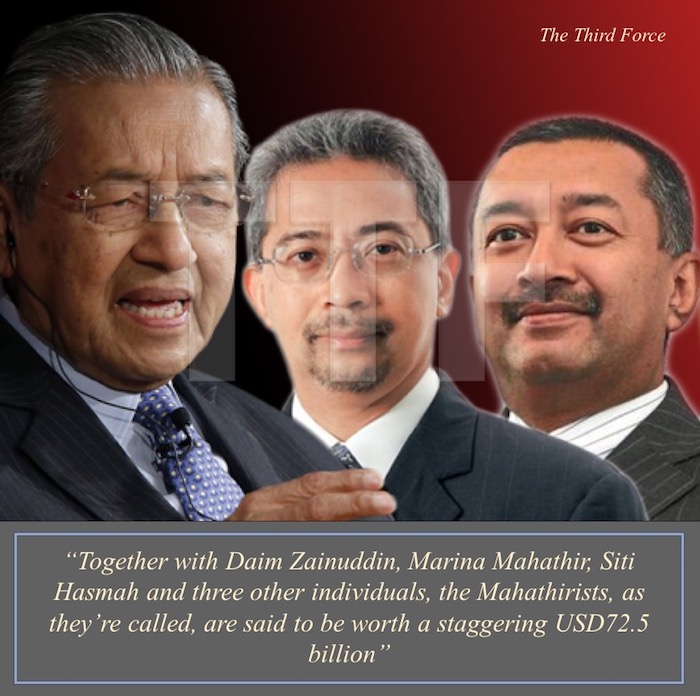
to the report, the Mahathirs owns US72.5 billion. How on earth can they accumulate so much earth? I hope that Malays in the third force will
ask the whole-wide world to help freeze the accounts under the name of the Mahathirs. The so-called Nasional Berhad were once run like
his own private companies. Petronas,
Khazanah and many and many and many ………….government-linked companies were in
his grasp. We all bear witness how he
amassed and squandered in many white elephant projects and he won commission in
?%; how he bailed out the ailing companies
at a price so much higher that market value all done for the sake of himself,
his family and cronies / accomplices and indulgence in his power to do so.
The road
building and repair are privatised all for his desire and will. He is the arch builder for the structural
model of monopoly and centralisation of power.
He needed loyalty and thus he had to create the control of all. The centralisation and monopoly just work
hand in hand to plunder, exploit, rob ….people at will. Can you understand why the financial
situations of the majority are getting harder and harder. He is the doer of all these problems. And Najib copied his models and tried to
create any legacy but ended in the mire.
The Malaya
privileges are true to those who wield the power or those are near to the
centre of power. I don’t think that the
Malaya privileges mean anything to those who do not even have access to proper
road system, basic amenities, education…
I hope that
the third force of Malayans,especially the Malay know so well whom you should
pound on when you are deprived of the allocations for development.
The
policy of discrimination, be it on race or religion will never augur well. I should say that it will bring curses and
shame only.
I am a
Sarawakian and we are going to quit from the federation of Malaysia for
good. I don’t think that I am going to
write on this again and again. I hope
that the third force of Malayans, especially the Malay should take actions to reject
any political clowns who are ever ready to bark on discrimination based on race
or religion. You should prepare to sue
the Mahathirs and his accomplices for the wrongs they have done to Malayans and
make them accountable. The palace-like
abodes the Mahathirs dwell in now should be turned into the meseums to showcase
to the whole-wide world for their misdeeds.
What has happened
to Najib and his accomplices now should
be trialed on Tun Mahathirs and his accomplices some day, too to be deemed fair
and square. Allah means Justice and
Love. Let Justice take its course. Najib is terrible but Mahathir is worse. All the best!
Wednesday, 24 October 2018
thethirdforce.net
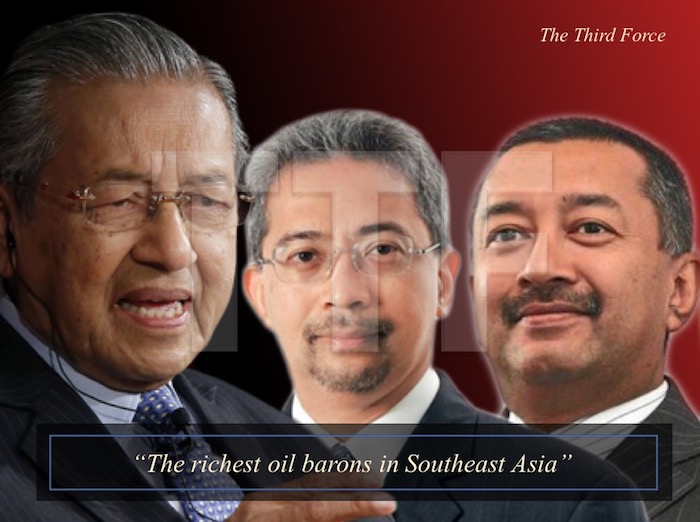
Mirzan Mahathir holds shares both in Petron Malaysia (PEM) and its parent concern, Petron Corporation.
He is also a stakeholder in San Miguel Corporation, a Philippines based food and beverage giant that owns 68.3 percent of Petron Corporation.
In 2011, Tan Sri Shahril Shamsuddin undertook in a massive RM12 billion deal with Tan Sri Mokhzani Mahathir to merge SapuraCrest Petroleum Bhd with Kencana.
The deal came to be known as “the largest deal ever in the history of corporate Malaysia” and gave Mokhzani access to exploration, extraction, shipping, and wholesale activities involving both ExxonMobile and Chevron.
The operations covered an expanse of over 1.3 million acres in Malaysia and Indonesia alone.
THE THIRD FORCE
Early in January 2013, a large number of Malaysians became confused when Petron Corporation (PCOR) commenced the rebranding of almost 600 Esso and Mobil gas stations nationwide. These stations were inherited by PCOR through its acquisition of ExxonMobil’s downstream business in 2012 with EXCEL Petroleum, an industrial lubricant concern. The acquisition turned Mirzan Mahathir into a major petrol pump operator and the largest competitor there was to Petronas, an oil and gas giant fully owned by the Government of Malaysia (GoM).
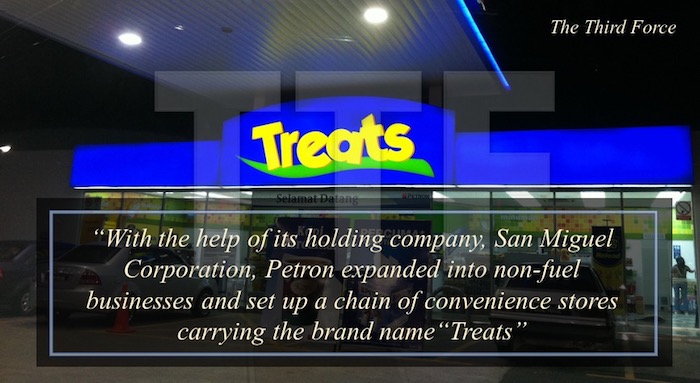
The son of Malaysia’s longest serving premier, Dr Mahathir Mohamad, Mirzan held shares both in Petron Malaysia (PEM) and its parent concern, PCOR. On the 15th of December 2010, a Philippine conglomerate specialising in food and beverage, San Miguel Corporation (SMC), exercised a share option that gave it 68.3 percent of PCOR’s stakes. A press release by Petron Malaysia dated the 5th of June 2013 confirmed that Mirzan did indeed hold substantial shares in the holding company and was a member of its board.
If that isn’t enough to convince you that Mirzan is behind PEM, several sections of PCOR’s and SMC’s by-laws stipulate that one needs to be a shareholder in order to sit on the directorial board of any of its companies. Mirzan was elected director of PCOR on the 13th of August 2010. That should put to rest any doubt that the son of Mahathir is indeed a stakeholder in the largest oil refining and marketing company there is in the Philippines.
Now that we have that covered, let’s move on to the most pressing of all questions, one that probably is on everyone’s mind – just what exactly does Mirzan control? What is it that the Mahathirists – i.e., people who’d die for Mahathir just to keep his material worth a secret – are keeping from us? Is it true that the family of Mahathir Mohamad controls substantial interests in the oil and gas industry and may be the richest oil baron family there is in Southeast Asia?
By virtue of PCOR’s holding of ExxonMobile’s downstream business – or, business that concerns marketing, refining and retail operations, Mirzan has somewhat of an exclusive say in the way retail is handled across the Peninsula of Malaysia, Sabah and Sarawak. He does not, however, have access to ExxonMobile’s oil exploration, extraction, shipping and wholesale operations, activity that brings in ten times more profit than retail. That access was provided to him in 2013 though through a massive network of associations that involved his brother, Tan Sri Mokhzani Mahathir.
Mokhzani’s flirt with the oil and gas industry began with Kencana Petroleum Berhad, an integrated engineering and fabrication oil and gas production outfit that specialised in building and supplying drilling rigs. Despite being the record holder for providing the world’s tallest movable wellhead platforms, the company lacked deepsea drilling technology on par with what the Chinese had developed for exploration in the South China Sea. Mokhzani began looking for partners who could provide the service and knowhow but refused to consider Petronas as an option.
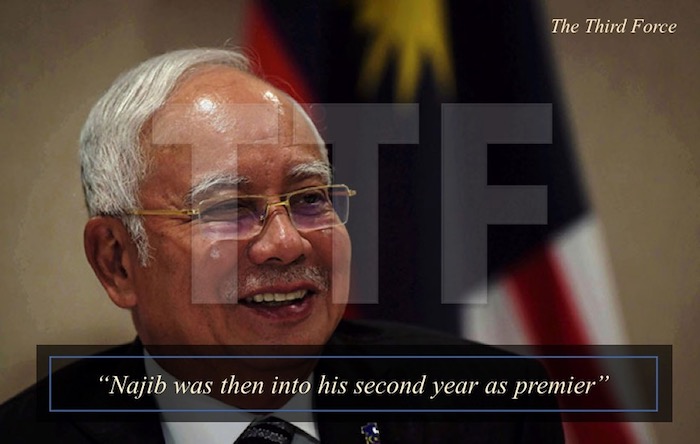
Mokhzani’s father, Mahathir, was sore that Najib had not revived plans to build a crooked bridge to replace the Malaysian side of the Johor-Singapore causeway. The whole purpose of the bridge was to force Singapore into renegotiating Maritime Security arrangements with Malaysia in ways that would grant our country access to oil rich areas at the edge of the South China Sea. Najib’s refusal to revive the project made dealing with Petronas less appealing. While Mahathir sat contriving plans to oust Najib as a measure of vendetta, Mokhzani turned to his childhood friend and longtime associate, Tan Sri Shahril Shamsuddin.
Shahril was then the co-owner of his family telecommunications concern, Sapura. In 2011, he undertook in a massive RM12 billion deal with Mokhzani to merge SapuraCrest Petroleum Bhd with Kencana. The deal came to be known as “the largest ever in the history of corporate Malaysia” and resulted in the establishment of SapuraKencana (SK) Petroleum, an integrated oil and gas service and solutions provider. Late in 2012, both Shahril and Mokhzani turned Seadrill Ltd into SK’s second largest shareholder by getting the Bermuda based deepwater drilling company to part with 49 percent of its stake in the tender-rig business.
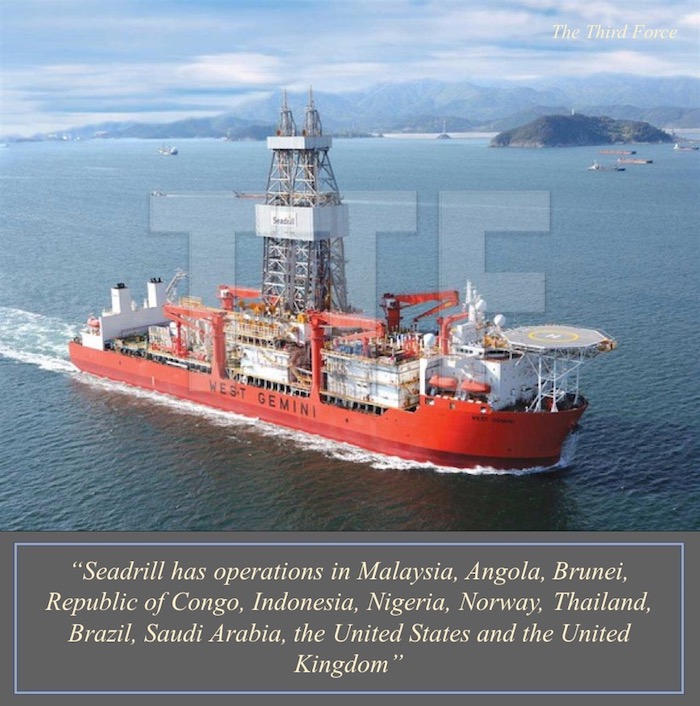
The deal cost SK USD2.9 billion and earned the company substantial control of the tender-rig market, then estimated to be worth some USD2 trillion. Seadrill’s owner, a Norwegian tycoon named Fredriksen, hopped on to SK’s board and helped Shahril secure some terms of associations with ExxonMobil and Chevron. That immediately turned SK into one of the world’s largest integrated oil and gas services and solutions provider and offered Mokhzani an opportunity to tap into ExxonMobil’s upstream business.
With the help of some nominee concerns that had direct and beneficial ownerships in oil related companies, Mokhzani was able to penetrate the exploration, extraction, shipping, and wholesale part of ExxonMobile’s operations, which, in Malaysia and Indonesia alone, covered an expanse of over 1.3 million acres. That gave Mahathir’s sons significant control of ExxonMobil’s upstream and downstream business within the region and turned them into the richest and most manipulative oil barons there were in Southeast Asia.
To be continued…
Petron, Mirzan, Mokhzani and Mahathir - The richest oil barons in Southeast Asia (Part One)
Raggie Jessy
Mirzan Mahathir holds shares both in Petron Malaysia (PEM) and its parent concern, Petron Corporation.
He is also a stakeholder in San Miguel Corporation, a Philippines based food and beverage giant that owns 68.3 percent of Petron Corporation.
In 2011, Tan Sri Shahril Shamsuddin undertook in a massive RM12 billion deal with Tan Sri Mokhzani Mahathir to merge SapuraCrest Petroleum Bhd with Kencana.
The deal came to be known as “the largest deal ever in the history of corporate Malaysia” and gave Mokhzani access to exploration, extraction, shipping, and wholesale activities involving both ExxonMobile and Chevron.
The operations covered an expanse of over 1.3 million acres in Malaysia and Indonesia alone.
THE THIRD FORCE
Early in January 2013, a large number of Malaysians became confused when Petron Corporation (PCOR) commenced the rebranding of almost 600 Esso and Mobil gas stations nationwide. These stations were inherited by PCOR through its acquisition of ExxonMobil’s downstream business in 2012 with EXCEL Petroleum, an industrial lubricant concern. The acquisition turned Mirzan Mahathir into a major petrol pump operator and the largest competitor there was to Petronas, an oil and gas giant fully owned by the Government of Malaysia (GoM).
The son of Malaysia’s longest serving premier, Dr Mahathir Mohamad, Mirzan held shares both in Petron Malaysia (PEM) and its parent concern, PCOR. On the 15th of December 2010, a Philippine conglomerate specialising in food and beverage, San Miguel Corporation (SMC), exercised a share option that gave it 68.3 percent of PCOR’s stakes. A press release by Petron Malaysia dated the 5th of June 2013 confirmed that Mirzan did indeed hold substantial shares in the holding company and was a member of its board.
If that isn’t enough to convince you that Mirzan is behind PEM, several sections of PCOR’s and SMC’s by-laws stipulate that one needs to be a shareholder in order to sit on the directorial board of any of its companies. Mirzan was elected director of PCOR on the 13th of August 2010. That should put to rest any doubt that the son of Mahathir is indeed a stakeholder in the largest oil refining and marketing company there is in the Philippines.
Now that we have that covered, let’s move on to the most pressing of all questions, one that probably is on everyone’s mind – just what exactly does Mirzan control? What is it that the Mahathirists – i.e., people who’d die for Mahathir just to keep his material worth a secret – are keeping from us? Is it true that the family of Mahathir Mohamad controls substantial interests in the oil and gas industry and may be the richest oil baron family there is in Southeast Asia?
By virtue of PCOR’s holding of ExxonMobile’s downstream business – or, business that concerns marketing, refining and retail operations, Mirzan has somewhat of an exclusive say in the way retail is handled across the Peninsula of Malaysia, Sabah and Sarawak. He does not, however, have access to ExxonMobile’s oil exploration, extraction, shipping and wholesale operations, activity that brings in ten times more profit than retail. That access was provided to him in 2013 though through a massive network of associations that involved his brother, Tan Sri Mokhzani Mahathir.
Mokhzani’s flirt with the oil and gas industry began with Kencana Petroleum Berhad, an integrated engineering and fabrication oil and gas production outfit that specialised in building and supplying drilling rigs. Despite being the record holder for providing the world’s tallest movable wellhead platforms, the company lacked deepsea drilling technology on par with what the Chinese had developed for exploration in the South China Sea. Mokhzani began looking for partners who could provide the service and knowhow but refused to consider Petronas as an option.
Mokhzani’s father, Mahathir, was sore that Najib had not revived plans to build a crooked bridge to replace the Malaysian side of the Johor-Singapore causeway. The whole purpose of the bridge was to force Singapore into renegotiating Maritime Security arrangements with Malaysia in ways that would grant our country access to oil rich areas at the edge of the South China Sea. Najib’s refusal to revive the project made dealing with Petronas less appealing. While Mahathir sat contriving plans to oust Najib as a measure of vendetta, Mokhzani turned to his childhood friend and longtime associate, Tan Sri Shahril Shamsuddin.
Shahril was then the co-owner of his family telecommunications concern, Sapura. In 2011, he undertook in a massive RM12 billion deal with Mokhzani to merge SapuraCrest Petroleum Bhd with Kencana. The deal came to be known as “the largest ever in the history of corporate Malaysia” and resulted in the establishment of SapuraKencana (SK) Petroleum, an integrated oil and gas service and solutions provider. Late in 2012, both Shahril and Mokhzani turned Seadrill Ltd into SK’s second largest shareholder by getting the Bermuda based deepwater drilling company to part with 49 percent of its stake in the tender-rig business.
The deal cost SK USD2.9 billion and earned the company substantial control of the tender-rig market, then estimated to be worth some USD2 trillion. Seadrill’s owner, a Norwegian tycoon named Fredriksen, hopped on to SK’s board and helped Shahril secure some terms of associations with ExxonMobil and Chevron. That immediately turned SK into one of the world’s largest integrated oil and gas services and solutions provider and offered Mokhzani an opportunity to tap into ExxonMobil’s upstream business.
With the help of some nominee concerns that had direct and beneficial ownerships in oil related companies, Mokhzani was able to penetrate the exploration, extraction, shipping, and wholesale part of ExxonMobile’s operations, which, in Malaysia and Indonesia alone, covered an expanse of over 1.3 million acres. That gave Mahathir’s sons significant control of ExxonMobil’s upstream and downstream business within the region and turned them into the richest and most manipulative oil barons there were in Southeast Asia.
To be continued…
thethirdforce.net
THE THIRD FORCE
Daim Zainuddin is in China.
The Council of Eminent Persons (CEP) de facto chief, tasked with advising Dr Mahathir Mohamad on economic matters, is really there to negotiate the establishment of a banking nexus involving some financial institutions he owns together with China’s CITIC Bank and Export-Import Bank (EXIM). On the 15th of July 2018, The Third Force took the wraps of a conspiracy involving Daim and Tan Sri Vincent Tan to part finance the construction of the East Coast Rail Link (ECRL) project (READ FULL STORY HERE). Vincent, who currently is the beneficial owner of a local entity that jointly bid for the project, is seeking Daim’s assistance to provide that entity assistance in the form of soft loans.
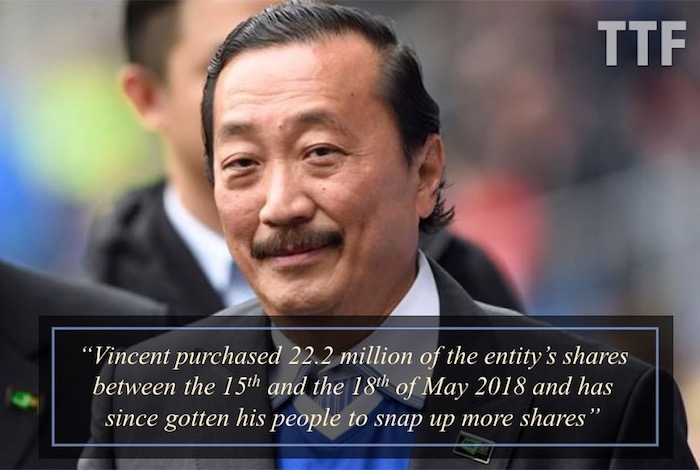
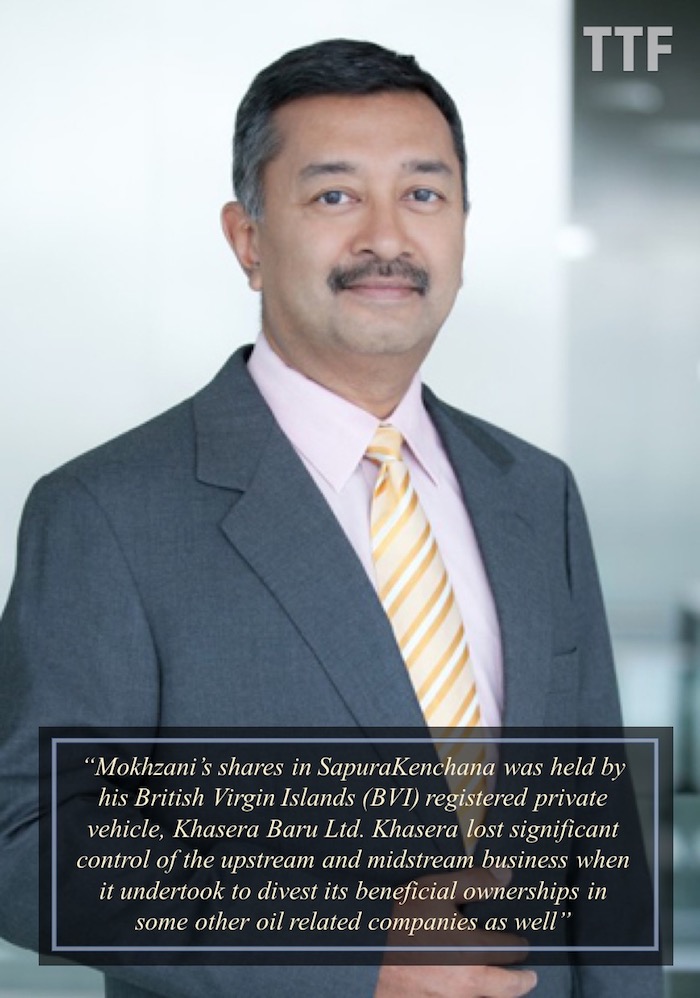
The said entity, Syarikat T7 Global Sdn Bhd, happens to be an oil and gas service provider that both Mahathir and his sons have a great deal of interest in. On the 1st of June 2018, The Third Force made known the extent of control Mahathir’s sons once had over ExxonMobil’s upstream and downstream business within the region (READ FULL STORY HERE). Mokhzani Mahathir lost a chunk of that control in 2017 when he undertook to dispose of his 190.3 million stake in SapuraKenchana Petroleum Bhd (SK), an oilfield services company he established six years earlier together with childhood friend,Tan Sri Shahril Shamsuddin.
Mahathir wants that control back.
That explains why he’s interested in building a new island where the once disputed Middle Rocks cluster (known also as the Pedra Branca island) stands. After meeting Singaporean premier Lee Hsien Long on the 19th of May 2018, he quickly announced the scrapping of the Kuala Lumpur-Singapore High-Speed Rail (HSR) Link between Kuala Lumpur and the southern republic before making known his plan to expand Malaysian territory southward. The expansion involves the introduction of non-submerged land mass around the Middle Rocks cluster, which happens to sit within the eastern opening of the Singapore Straits and the western edge of the South China Sea.
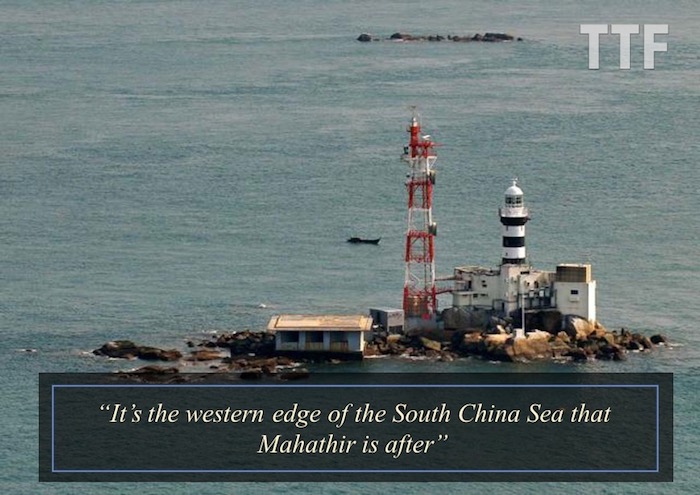
The area is rich with oil and is of interest to both Singapore and the People’s Republic of China. Mahathir is aware that the Chinese government has long had disputes with the Singaporean government and is desperate to work with Malaysia in exploiting the region. The building of an island where Middle Rocks stands seemed a perfect opportunity for him to redraw territorial borders and force Singapore into renegotiating Maritime Security arrangements. The renegotiation would immediately grant Malaysia exclusive rights to the edge of the South China Sea and allow China to participate in deep sea drilling.
But the only Malaysian oil and gas entity that currently has access to deep sea technology is Petronas, a company neither Mokhzani nor Mirzan Mahathir have control over. Mokhzani lost access to that technology when he got Khasera to dispose of its holdings in SK and beneficial ownerships in some oil and gas concerns worldwide. Mirzan is working to regain that access by interesting San Miguel Corporation into purchasing a chunk of Petronas’ interests. Just so that you know, San Miguel is a food and beverages (F&B) conglomerate that owns 63 percent of Petron Corporation.
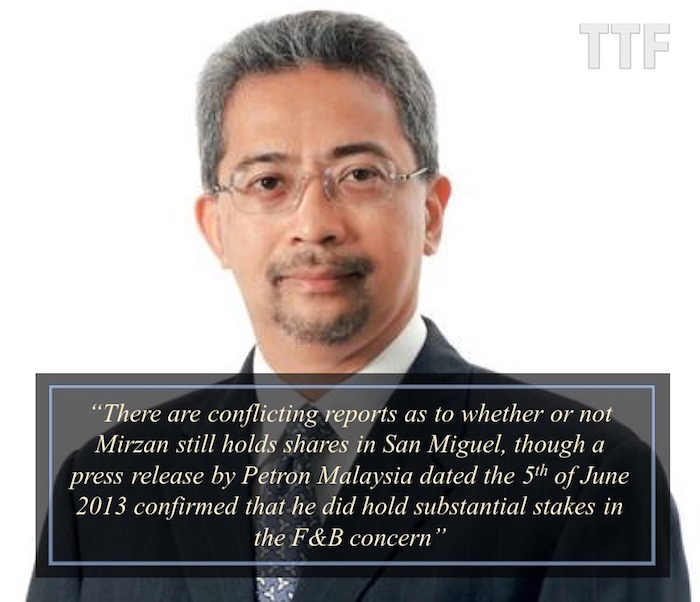
Mahathir is backing Mirzan all the way in his pursuit for deep water technology. To prevent the possibility of there being competition for his sons in the near or distant future, the Prime Minister is undertaking to consolidate all oil and gas related entities in Malaysia that are service based under the roofs of his cronies. That helps explain Vincent’s recent purchase of T7 shares and the initial scrapping of the HSR project. By calling off the project, Mahathir effected a 37.6 percent decline in the price of Gamuda Berhad’s shares which Daim’s and Vincent’s people have since purchased.
Gamuda had previously partaken in a 50:50 joint venture (JV) to provide solutions mainly to the Government of Malaysia (GoM). The company it partnered with, MMC Corporation Berhad, is an investment holding entity that is 51.8 percent owned by Tan Sr Syed Mokhtar Al-Bukhary. Syed was the onetime owner of an oil and gas concern that he recently sold to one of his own companies, Melati Pertiwi Sdn Bhd.
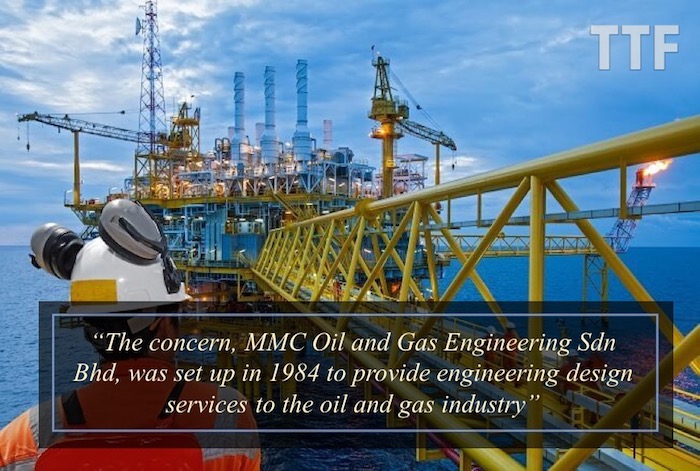
Thus, not only is Bukhari in the business of oil and gas, he is a joint shareholder with Gamuda in a company that constructs airports, highways, bridges and railway links. That is another reason why Daim is seeking to renegotiate terms associated with the construction of the ECRL. Apart from looking at ways to establish a banking nexus with EXIM and CITIC, the Council of Eminent Persons (CEP) de facto chief is seeking to offer MMC-Gamuda a lucrative slice of the ECRL project in a quid pro quo that involves the transfer of Melati Pertiwi shares to his people. The Chinese government is expected to commit itself to Melati Pertiwi in deep sea drilling at the edge of the South China Sea.
The deal would ultimately allow Syed Mokhtar to partake with Vincent in a cost-appreciated version of the railway project and Mahathir to sink his teeth into Syed’s oil and gas interest. And if you’re thinking that Tan Sri Zeti Akhtar Aziz has nothing to do with all this, you’re dead wrong…
To be continued…
How Daim’s China trip has to do with Mahathir’s sons (Part Two)
Raggie Jessy
Daim Zainuddin is in China for two reasons.
First, he is seeking to tie some financial institutions he owns together with China’s CITIC Bank and Export-Import Bank (EXIM).
Second, he is seeking a quid pro quo that will ultimately see Dr Mahathir Mohamad’s son acquire the beneficial ownership of an oil and gas concern that the Chinese government is expected to commit to.
The deal is expected to rake in some RM20 billion for Daim and gang from out of thin air.
THE THIRD FORCE
Daim Zainuddin is in China.
The Council of Eminent Persons (CEP) de facto chief, tasked with advising Dr Mahathir Mohamad on economic matters, is really there to negotiate the establishment of a banking nexus involving some financial institutions he owns together with China’s CITIC Bank and Export-Import Bank (EXIM). On the 15th of July 2018, The Third Force took the wraps of a conspiracy involving Daim and Tan Sri Vincent Tan to part finance the construction of the East Coast Rail Link (ECRL) project (READ FULL STORY HERE). Vincent, who currently is the beneficial owner of a local entity that jointly bid for the project, is seeking Daim’s assistance to provide that entity assistance in the form of soft loans.
The said entity, Syarikat T7 Global Sdn Bhd, happens to be an oil and gas service provider that both Mahathir and his sons have a great deal of interest in. On the 1st of June 2018, The Third Force made known the extent of control Mahathir’s sons once had over ExxonMobil’s upstream and downstream business within the region (READ FULL STORY HERE). Mokhzani Mahathir lost a chunk of that control in 2017 when he undertook to dispose of his 190.3 million stake in SapuraKenchana Petroleum Bhd (SK), an oilfield services company he established six years earlier together with childhood friend,Tan Sri Shahril Shamsuddin.
Mahathir wants that control back.
That explains why he’s interested in building a new island where the once disputed Middle Rocks cluster (known also as the Pedra Branca island) stands. After meeting Singaporean premier Lee Hsien Long on the 19th of May 2018, he quickly announced the scrapping of the Kuala Lumpur-Singapore High-Speed Rail (HSR) Link between Kuala Lumpur and the southern republic before making known his plan to expand Malaysian territory southward. The expansion involves the introduction of non-submerged land mass around the Middle Rocks cluster, which happens to sit within the eastern opening of the Singapore Straits and the western edge of the South China Sea.
The area is rich with oil and is of interest to both Singapore and the People’s Republic of China. Mahathir is aware that the Chinese government has long had disputes with the Singaporean government and is desperate to work with Malaysia in exploiting the region. The building of an island where Middle Rocks stands seemed a perfect opportunity for him to redraw territorial borders and force Singapore into renegotiating Maritime Security arrangements. The renegotiation would immediately grant Malaysia exclusive rights to the edge of the South China Sea and allow China to participate in deep sea drilling.
But the only Malaysian oil and gas entity that currently has access to deep sea technology is Petronas, a company neither Mokhzani nor Mirzan Mahathir have control over. Mokhzani lost access to that technology when he got Khasera to dispose of its holdings in SK and beneficial ownerships in some oil and gas concerns worldwide. Mirzan is working to regain that access by interesting San Miguel Corporation into purchasing a chunk of Petronas’ interests. Just so that you know, San Miguel is a food and beverages (F&B) conglomerate that owns 63 percent of Petron Corporation.
Mahathir is backing Mirzan all the way in his pursuit for deep water technology. To prevent the possibility of there being competition for his sons in the near or distant future, the Prime Minister is undertaking to consolidate all oil and gas related entities in Malaysia that are service based under the roofs of his cronies. That helps explain Vincent’s recent purchase of T7 shares and the initial scrapping of the HSR project. By calling off the project, Mahathir effected a 37.6 percent decline in the price of Gamuda Berhad’s shares which Daim’s and Vincent’s people have since purchased.
Gamuda had previously partaken in a 50:50 joint venture (JV) to provide solutions mainly to the Government of Malaysia (GoM). The company it partnered with, MMC Corporation Berhad, is an investment holding entity that is 51.8 percent owned by Tan Sr Syed Mokhtar Al-Bukhary. Syed was the onetime owner of an oil and gas concern that he recently sold to one of his own companies, Melati Pertiwi Sdn Bhd.
Thus, not only is Bukhari in the business of oil and gas, he is a joint shareholder with Gamuda in a company that constructs airports, highways, bridges and railway links. That is another reason why Daim is seeking to renegotiate terms associated with the construction of the ECRL. Apart from looking at ways to establish a banking nexus with EXIM and CITIC, the Council of Eminent Persons (CEP) de facto chief is seeking to offer MMC-Gamuda a lucrative slice of the ECRL project in a quid pro quo that involves the transfer of Melati Pertiwi shares to his people. The Chinese government is expected to commit itself to Melati Pertiwi in deep sea drilling at the edge of the South China Sea.
The deal would ultimately allow Syed Mokhtar to partake with Vincent in a cost-appreciated version of the railway project and Mahathir to sink his teeth into Syed’s oil and gas interest. And if you’re thinking that Tan Sri Zeti Akhtar Aziz has nothing to do with all this, you’re dead wrong…
To be continued…
RELATED LINK:
OTHER LINKS:
Petron, Mirzan, Mokhzani and Mahathir – The richest oil barons in Southeast Asia (Part One)
Dr M scrapped the HSR project to gain control of SPLASH
wsj.com
MISC to Pay $220 Million Price For Assets From Mahathir's Son
Chen May YeeStaff Reporter of The Wall Street Journal
KUALA
LUMPUR, Malaysia -- Easing fears of an expensive, politically motivated
rescue, a state-controlled shipper said it would pay $220 million for
assets from Prime Minister Mahathir Mohamad's eldest son, a price many
analysts called fair.
When Malaysia International Shipping Corp., or MISC, in March said it would buy the shipping assets of Mirzan Mahathir's company, Konsortium Perkapalan Bhd., whose primary activity is providing container-haulage services, it provoked accusations of a bailout, especially since Mr. Mirzan revealed that the sale would reduce his company's debt to almost zero. Many analysts viewed the deal as another example of the rescues that have put in doubt Malaysia's commitment to face its economic troubles, mainly by using state funds to help sickly private companies.
When Malaysia International Shipping Corp., or MISC, in March said it would buy the shipping assets of Mirzan Mahathir's company, Konsortium Perkapalan Bhd., whose primary activity is providing container-haulage services, it provoked accusations of a bailout, especially since Mr. Mirzan revealed that the sale would reduce his company's debt to almost zero. Many analysts viewed the deal as another example of the rescues that have put in doubt Malaysia's commitment to face its economic troubles, mainly by using state funds to help sickly private companies.
These
analysts came away happier Thursday. "Yes, [MISC is] helping out Mirzan,
but they are not paying a hefty price for it," said Alan Inn, an
analyst with Caspian Securities. "MISC got away quite nicely," he added.
"The entire exercise will make MISC a stronger organization," said MISC's chairman, Tan Sri Hassan Marican, who is also president of state oil company Petroliam Nasional Bhd., or Petronas.
"Overall," he added, "it is a fair deal for everyone."
The entire deal comes in several parts. MISC will buy the entire share capital of Petronas Tankers Sdn. Bhd. from Petronas by issuing 859.91 million new MISC ordinary shares of one ringgit (26.8 U.S. cents) each at 6.96 ringgit per share to Petronas. This will result in Petronas owning 62.01% of MISC, from 29.34% currently.
MISC will also buy Hong Kong-based PNSL Ltd., formerly known as Pacific Basin Bulk Shipping Ltd., from Konsortium Perkapalan, or KPB, for US$55 million. Analysts described the price as low but fair considering the expected hit the company's business will take from the Asian economic turmoil in the next few years. Mr. Mirzan had bought Pacific Basin in 1996 for US$230 million.
In addition, MISC will buy the assets of KPB's Malaysia-based PNSL Bhd. for US$165 million. Mr. Mirzan purchased PNSL Bhd. for 247.4 million ringgit from a state agency in 1992. The higher price MISC is paying partly stems from the charters and therefore fixed revenues these assets come with.
That means MISC will hand over a total of $220 million to Mr. Mirzan. That figure is just below the range of $224 million to $313 million at which the assets were valued by an independent appraiser appointed by MISC's bankers. That valuation assumed that MISC would also take over net debt of $311 million from the acquired companies.
Tan Sri Hassan said the parties expect to wrap up the deal by the end of August, subject to regulatory approval. MISC will pay for the deal partly from internal funds and partly from borrowings, he added.
"The entire exercise will make MISC a stronger organization," said MISC's chairman, Tan Sri Hassan Marican, who is also president of state oil company Petroliam Nasional Bhd., or Petronas.
"Overall," he added, "it is a fair deal for everyone."
The entire deal comes in several parts. MISC will buy the entire share capital of Petronas Tankers Sdn. Bhd. from Petronas by issuing 859.91 million new MISC ordinary shares of one ringgit (26.8 U.S. cents) each at 6.96 ringgit per share to Petronas. This will result in Petronas owning 62.01% of MISC, from 29.34% currently.
MISC will also buy Hong Kong-based PNSL Ltd., formerly known as Pacific Basin Bulk Shipping Ltd., from Konsortium Perkapalan, or KPB, for US$55 million. Analysts described the price as low but fair considering the expected hit the company's business will take from the Asian economic turmoil in the next few years. Mr. Mirzan had bought Pacific Basin in 1996 for US$230 million.
In addition, MISC will buy the assets of KPB's Malaysia-based PNSL Bhd. for US$165 million. Mr. Mirzan purchased PNSL Bhd. for 247.4 million ringgit from a state agency in 1992. The higher price MISC is paying partly stems from the charters and therefore fixed revenues these assets come with.
That means MISC will hand over a total of $220 million to Mr. Mirzan. That figure is just below the range of $224 million to $313 million at which the assets were valued by an independent appraiser appointed by MISC's bankers. That valuation assumed that MISC would also take over net debt of $311 million from the acquired companies.
Tan Sri Hassan said the parties expect to wrap up the deal by the end of August, subject to regulatory approval. MISC will pay for the deal partly from internal funds and partly from borrowings, he added.
Subscribe to:
Posts (Atom)