the __earthinc
Reasonably libertarian
[2835] The economy Mahathir created
October 11th, 2016 by Hafiz Noor Shams
The Sultan Abdul Samad Building stood as Kuala Lumpur’s chief landmark for almost a hundred years. But on one fine morning in the late 1990s, two bluish skyscrapers dethroned the onion coppered-domes structure as the new symbol of Kuala Lumpur. The Petronas Towers emerged as the world’s tallest building.
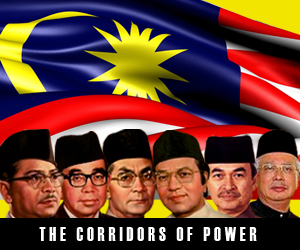
This was possible due to one man. He is Mahathir Mohamad, the fourth Prime Minister of Malaysia.
The man did more than merely changed the landmark of the city. The symbolism — the switch from a building of colonial origin to one of contemporary Malaysia — reaches out with a far greater nuance. It represents the Malaysian industrial revolution that happened under his watch.
The reality of Malay feudalism
Munshi Abdullah in the early 1800s criticized Malay rulers on the east coast for killing a person’s motivation to work. Far too frequently, those in power would confiscate wealth from the common folks, making the reward for work nonexistent for the majority. Capital accumulation for the masses — the recipe for modern capitalism — was impossible for the ruled.
Things improved when the British arrived, especially in the 19th century. Armed with advancement of the European Industrial Revolution, colonial technology increased productivity and brought material progress to Malaya and other parts of the region. Yet, the improvement was largely limited to the crown colonies and the colonial capitalists monopolized the most productive economic sectors, with most of the profits repatriated abroad instead of being reinvested locally. Penang, Malacca, Singapore and other smaller settlements like Kuching and Taiping were of their time, glittering cities benefiting from electricity, street lights, paved roads, schools and clinics, standing apart from the underdeveloped interior where many lived.
From our vantage point today, the situation had barely improved by the middle of the 20th century. Even as Malaya and later Malaysia emerged out of the Second World War, it was unclear if the welfare of the majority had risen meaningfully. Kua Kia Soong is convinced the May 13 race riots in 1969 was a coup by Tun Razak Hussein who rode on Malay peasant discontent against Tunku Abdul Rahman’s overly hands-off policy, as the glow of 1957 Merdeka and the 1963 Malaysia gave way to economic woes.
Mahathir’s industrial revolution
Mahathir’s industrial revolution of the 1980s and the 1990s overturned the highly inflexible calcified society. Fewer sons and daughters of fishermen and farmers took up their parents’ low-paying professions. Capital accumulation became possible for more and more people, freeing them from suffocating unjust feudalism.
They participated in the cogs of modern economy and migrated to the cities at an unprecedented rate. The rapid urbanization created or expanded towns like Petaling Jaya and Subang Jaya — a manifestation of the industrial revolution — to cater to the housing needs of the new urban middle class.
It was not just wealth that began to build up outside of the feudalist circle. Political power did too. Mahathir is the first prime minister who has no blood ties to the royal court. The other Prime Ministers were or are all blue-blooded, with the exception of Abdullah Ahmad Badawi, Mahathir’s immediate successor.
Malaysia experienced its fastest economic expansion in the 1970s — growth in the decade averaged 7.9% yearly — but it was during the 1980s that growth really took off in a manner the man on the street could feel the rising tides. The expansion of the 1990s would have been far greater if it was not for the devastating Asian Financial Crisis. The 1998 recession remains Malaysia’s worst yet.

Causes of the 1980s-1990s growth
The success of Mahathir’s Malaysia of the 1980s and the 1990s did not come out of vacuum.
The controversial affirmative action New Economic Policy (NEP) formulated in the aftermath of the 1969 race riots permeated the air. An activist government redistributed wealth across the society especially among the Malay populace in the 1970s to appease the peasant discontent, and to create a new and larger urban middle class. But the policy took time to mature and it ripened during Mahathir’s premiership. This was particularly true on the education front. The rapid expansion of formal education up to the tertiary level created enough talents to sustain an industrialization drive.
Equally important in industrializing Malaysia was the role played by Japan. Lee Kuan Yew engineered Singapore’s fantastic rise by capturing capital fleeing communist China’s disastrous 1960s-1970s Cultural Revolution (Chinese capital also fled to Hong Kong and Taiwan even earlier in the 1940s-1950s during the Chinese Civil War that the communists eventually won). Malaysia engineered ours by welcoming Japanese money and technology in the 1980s-1990s.
We have to understand the Japan of that time to understand its role in shaping Mahathir’s Malaysia. The Japanese post-war economic miracle created demand that far exceeded whatever input — labor, land, raw material — that existed domestically. The same problem had brought the Japanese Imperial Amry out to mainland Asia and to the archipelagos down south. The rapid reindustrialization out of the ashes of Hiroshima and Nagasaki used up all the workers the Japanese society could provide. Wages rose precipitously and so did cost of doing business. This was coupled with the 1985 Plaza Accord where major powers of the world agreed to the devaluation of the US dollar relative to the yen. The result: Japanese exports became increasingly expensive and uncompetitive in the US and in other countries where the local currency was linked to the dollar. In those days, the dollar was the effective gold standard.
Rising cost, severe labor shortage and strengthening yen threatened the profitability of exporting Japanese firms like Hitachi, Mitsui and Toyota. In order to remain competitive, they needed cheaper production bases outside of Japan.
Mahathir understood this perfectly and he cajoled Japan to invest in Malaysia in a big way. He succeeded.
Turning east from west
The Look East Policy should be read together with Mahathir’s Buy British Last. Unlike the earlier three Prime Ministers, Mahathir does not remember British rule as fondly. His family was far from the feudalist elites whom maintained close ties with the British. He did not spend his youth in England unlike the previous three prime ministers.
Even in a pro-British environment of the 1970s, Malaysia frequently clashed with British companies over the NEP. British investors then still owned a large chunk of Malaysian industries, especially in the plantation sector. Guthrie alone owned 17% of Malaysian land during the decade. British or European firms controlled 1.2 million out of 1.4 million acres of Malayan rubber plantation in the post-war period. James Puthucheary in his 1960 classic Ownership and Control in the Malayan Economy describes how strongly the British controlled the local economy in all sectors at that time.
Quoting a 1948 report, Puthucheary wrote “the control of Malaya’s most important industry by a ‘handful of large firms’ is the basis of the great political power wielded by them.” Indeed, the 1948 Emergency was declared only after the High Commissioner Edward Gent was pressured by British planters to do so, as recounted in Noel Barber’s The War of the Running Dogs. Gent was even removed from office because the planters did not like him. And the armed contest was called an emergency instead of a war only because the planters were worried insurers would refuse to cover losses arising from the conflict. But the Emergency was, in every respect, a civil war.
The Malaysianization of the domestic economy that began under the NEP — financed by oil windfall of the 1970s oil crisis — reached its climax under Mahathir when he sanctioned a 1981 dawn raid of Guthrie at the London Stock Exchange that ended with Malaysia owning the plantation major. Today, Guthrie is part of Sime Darby, which itself was acquired by the Malaysian government in 1977.
The hostile corporate maneuver of 1981 broke the Malaysia-Britain ties. So, Mahathir needed a new friend. Japan was looking for one too.
The two industrialization policies
Japan supplied the money and the technology but the inspiration for industrialization came from the four original Asian tigers. Hong Kong, Singapore, South Korea and Taiwan all became rich by exporting manufactured goods to the world. Malaysia and Thailand — perhaps less successfully, Indonesia and the Philippines — adopted the export-led industrialization with vigor beginning in the 1980s.
Singapore in particular has a special love-hate tie with Malaysia. After two years as part of the Malaysian federation — and for a longer time part of Malaya — Singapore was booted out in 1965. For some in Malaysia, seeing Singapore thriving instead of suffering since then must have been vexing. Mahathir could never have a sustained friendly tie with Singapore or with Lee Kuan Yew, a British-educated lawyer who had labelled the Singaporean-educated medical doctor from Kedah as a Malay ultra. The Mahathir-Lee rivalry must have inspired the former to play the catch-up game with Singapore, out of honor and ego.
Industrialization happened and Malaysia radically shifted its emphasis to exporting manufactured goods such as air-conditioners, refrigerators, televisions and computers from merely selling raw material like tin and rubber. The policy shift created jobs just decades ago did not exist.
Mahathir was not the first Malaysian leader who saw manufacturing and exports as the new growth engines. Penang under Lim Chong Eu figured it out first in the 1970s by inviting American corporations to invest there and subsequently turned Penang into the Southeast Asian hub for electronics manufacturing. But it was Mahathir who scaled the model up at the national level.
He did not just press for export-led industrialization. He also pursued import substitution industrialization by establishing heavy industries like steel-making and automotive. Perhaps he was unsure if he could succeed with pro-export bias only and as a precaution, he bet on two competing horses. Mahathir had a good role model to follow. South Korea believed in import substitution too and achieved great success with it.
Unfortunately for him, only one of the horses finished the race in good health. His export policy worked marvelously but the import substitution lost steam along the way.
The easiest example of the failed import substitution policy is Perwaja, which made billion of ringgit of losses due to mismanagement, corruption and bad business model. Malaysia still has a steel industry despite the failure of Perwaja — a hung up from the Mahathir days — and it remains uncompetitive till this day. Domestic steel producers regularly lobby the government for protection from steel imports, unashamedly asking the public to pay for their losses.
The more interesting case is Proton. The whole enterprise got off to a good start in the 1980s with the help of Mitsubishi. The biggest factor contributing to Proton’s early success was the government support it received. Mahathir restricted competition by imposing astronomical tariffs on imported cars while refusing foreign car manufacturers the licenses they needed to produce in Malaysia. In a car-oriented society, a car was a necessity and most could afford Proton only.
But the success did not last for long.
Instead of following the Malaysian path, Thailand invited the likes of Toyota, Honda, Ford and General Motors to manufacture and assemble vehicles in Rayong. A great automotive city came to being south of Bangkok and turned Thailand into the largest vehicle manufacturer in Asean.
The implementation of the Asean Free Trade Area abolished import tariffs on all Asean cars. Proton too long addicted to protectionism, now had to compete with the automotive giants located up north.
The Malaysian carmaker competed badly. The Thai production was set up with the regional market in mind unlike Proton, which was and still is focused on the far smaller domestic market. That means Rayong manufacturers have the economies of scale Proton does not. It cost Thailand less to build a car than Malaysia could.
Proton lost the race by the 2000s. In 2016, it begged the Malaysian government for MYR1.5 billion just to survive. The Najib government bailed it out and it unlikely to be the last. The establishment of Proton has led to the creation of a long and complex supply chain which the government just cannot let fail out of political considerations, a legacy issue from the NEP as well as from Mahathir’s policy.
Foreign technology, foreign money and foreign labor
Regardless of import substitution failures, Malaysia industrialized.
Just like Japan, the 1980s-1990s Malaysian industrialization led to labor shortage. Export-oriented industrialization made the world the market. Yet, the 1981 Malaysian population of 14 million could not provide enough local hands to man the factories and build new office towers. The population size grew to 19 million by 1991 but still it was not enough. The economy was simply growing much faster than Malaysians could make babies.
Mahathir imported the workers Malaysia needed. The Petronas Towers were built by Japanese and Korean engineers, Malaysian oil money and Indonesian sweat. Without these foreign workers, the twin towers would not have been built and Malaysia would have unlikely to develop as fast.
This is an obvious historical parallel to the immigration of the late 20th century. When the British first introduced agricultural plantations and large-scaled mining, they quickly discovered the Malayan labor pool was too small to support their new economic endeavors. Syed Hussein Alatas in The Myth of the Lazy Native believed the Malay commoners refused to participate in these enterprises after witnessing how badly workers were treated on the plantations and in the mines. Life in the peaceful kampongs felt like paradise versus the hell within the mines. Yet, industrial production was the future, not subsistence activities. The British solved the problem by bringing in foreign workers from China, India and Java, who later became citizens of Malaysia.
Mahathir wanted Malaysia to have 70 million people by 2100. But rising prosperity is a potent birth control device. The average nuclear family size by early 2000s fell to about 4 persons a family from roughly 5 in the 1980s. It probably averaged 6 earlier. The United Nations projects by the end of this century, the Malaysian population will stabilize at around 41 million people from the current size of 31 million people. Immigration is likely the only way to achieve 70 million people target, if it is still a goal of the current government.
Some of these new immigrants will join us as citizens of this country if we intend to sustain our economic growth, changing the demographics of this land yet again. The alternative is Japan, a rich and advanced society, but with a shrinking population and a bleak future.
Loosening up of the NEP
One thing that stood in the way of export-led industrialization was the NEP as it imposed a 30% Bumiputra equity requirement on various sectors. Foreign investors did not like surrendering control of their investment to somebody else and they could simply go somewhere else — Thailand and Indonesia were the obvious alternatives — if they could not get their way. Despite being the author of The Malay Dilemma and an earlier proponent for the NEP, Mahathir was pragmatic. He abolished the requirement for foreign manufacturing as an expanded manufacturing would lift all boats up.
In 1986, foreign investors were allowed to hold 100% equity if at least half of their output were exported. By 1998, they were permitted to have 100% equity regardless of export level as the government tried to stimulate an economy battered by the Asian Financial Crisis.
Coupled with various tax incentives, the abolition spurred investment into manufacturing. Industrial free zones with minimal customs supervision popped up like mushrooms after the rain in Selangor, Penang and Johor. Non-Japanese companies like Intel, Dell and Texas Instruments set up plants in these zones. By the 1990s, manufacturing made up a quarter of the country’s economic output in contrast to 1965 when it was only a tenth and when agriculture dominated the economy. Malaysia was transformed radically then well before Najib Razak’s transformation programs.

From industry captains…
Mahathir was still obsessed with hitting the 30% Bumiputra equity target despite abolishing that quota requirement for foreign manufacturers. With the NEP ending in 1990, he was at risk of coming short. He addressed that by picking and nurturing a cohort of Malay industrialists to help him achieve that goal.
Privatization was the favorite means by which the Mahathir government used to create the Malay industrialist class. It also killed two birds with one stone, as privatization tackled the problem of bloated inefficient government by cutting public expenditure.
Mahathir had inherited a monster of a government when he first came to power. Public spending had expanded greatly in the 1970s as the government sought to fulfil its NEP redistributive objectives. Public agencies and enterprises employed more and more people while disregarding the negative effects that had on efficiency.
The government would have been able to sustain the whole NEP spending if it was not for the mid-1980s recession. Oil, tin and rubber prices collapsed. Government revenue was depressed. Deficit widened. The government’s own import substitution initiatives cost money. One could not have one’s cake and eat it too.
A choice had to be made and Mahathir pushed the privatization drive through. Among the beneficiaries of the action were Tajuddin Ramli, Yahya Ahmad and Halim Saad. Malaysia Airlines, Celcom, Hicom and many others were privatized to the new Malay industrialists. Funnily enough despite not attending the school, Mahathir’s policy gave rise to the so-called ”MCKK mafia” — a circle of Malay College men whom dominated the Malaysian corporate scene prior to the 1998 recession.
Beyond the elite circle, the floating of government enterprises on the stock exchange gave a wider segment of the Malaysian population a chance to participate in the equity market.
There were Chinese and Indian entrepreneurs who enjoyed government support too. They went on to build companies like YTL, Genting, Berjaya and Maxis. One must not forget YTL was one of several companies that benefited massively from the first generation independent power producer (IPP) policy, arguably at the expense of Tenaga Nasional and the public. The IPP saga is a reminder that while the 1980s-1990s privatizations bore dividend, it also had its cost. The cost manifested itself spectacularly during the 1997-1998 Asian Financial Crisis.
…to crony capitalism
These individuals and companies were linked to the government, and Umno, through privatization of government enterprises, the award of government contracts or the granting of monopoly over a particular good or service. Edmund Terence Gomez and Jomo Kwame Sundaram wrote a 1997 book detailing the extensive links these businesses had with Umno and Barisan Nasional. There is no doubt that they financed Umno while industrializing Malaysia.
As the 1990s boom peaked, these celebrated companies making up Malaysia Inc. were slowly perceived as corrupt villains. The term cronyism entered the Malaysian vocabulary. The NEP, which was meant to help the masses, was now criticized as an excuse to fatten the selected few. Many laypersons believed the NEP had been corrupted.
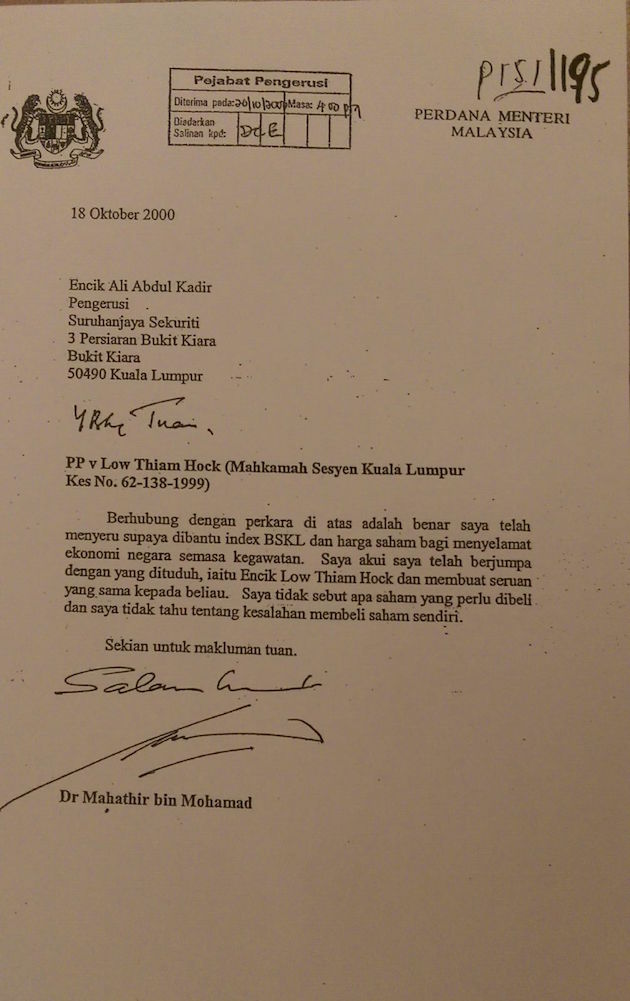
The accusation of cronyism and corruption was not far from the truth. During the Asian Financial Crisis, many of these privatized companies were bailed out by the government. In 1998, state-controlled MISC bought the heavily indebted and financially stressed Konsortium Perkapalan for $220 million. The latter was controlled by Mahathir’s son, Mirzan. Many other industry captains nurtured by Mahathir had to be bailed out too.
The economic stress led to differences between Mahathir and his deputy, Anwar Ibrahim. Anwar, unceremoniously fired from office by Mahathir, later mounted a massive opposition against the government, demanded reformasi and opened a new contested chapter of Malaysian politics.
The Asian Financial Crisis
Mahathir liberalized the economy after a decade or two of NEP. The Asian Financial Crisis forced him to reverse the course.
Firms across Asia had borrowed heavily in foreign currencies during the 1990s economic expansion. In good times, servicing the debt was easy. But by mid-1997, local Southeast Asian currencies crashed and it increased these companies’ debt burden by multiple folds, automatically rendering them beyond sustainability. It began with the collapse of the baht and it developed into a full-blown regional contagion. The ringgit was not spared. Bankruptcy was inevitable for many across multiple countries.

The International Monetary Fund had proposed Malaysia let these businesses — including those helmed by Mahathir-linked industry captains — fail. In return for an emergency fund, the IMF also proposed the adoption of an austere fiscal policy to strengthen the ringgit. The idea was that if the ringgit recovered, it would reduce the debt burden.
Mahathir would have none of that, in contrast to Indonesia, Thailand and South Korea. He famously stood up, turned his back and did the opposite of IMF recommendations. Malaysia imposed capital controls and pegged the ringgit at MYR3.80 to a dollar. His Keynesian economic prescription shook the realm of orthodox macroeconomics, just as he shocked the world by coming down on Anwar Ibrahim in the most disagreeable manner.

Malaysia Airlines and Renong were saved.
Danaharta bought bad loans in the domestic system.
Danamodal recapitalized domestic banks straddled with bad debt.
Megaprojects like Bakun ran aground and needed public money to go on.
Companies managing the light rail transit and the monorail systems were acquired by the government too; they were later restructured into Prasarana Negara and RapidKL.
These companies — the success story of Mahathir’s privatization effort — failed and were renationalized. They would later come primarily under the control of Khazanah Nasional, Malaysia’s sovereign wealth fund.
With mandate from Prime Minister Abdullah Ahmad Badawi — Mahathir’s successor — Azman Mokhtar working from Khazanah’s office on level 33 of the Petronas Towers transformed these so-called government-linked companies into the biggest corporations in the region. Corporate governance was improved and so did profitability. The turnaround has been so successful that these GLCs are often accused of crowding out the private sector out of the market.
The current success of these GLCs is a happy outcome of the 1990s bailout. But some things never change. Malaysia Airlines and Proton are still in trouble after all these years.
It would take the IMF more than ten years later to write a mea culpa — admitting austerity did not work — as the organization grappled with the 2008 global financial crisis and the subsequent European sovereign debt crisis.
But even as Mahathir’s supporters cheered the apology, lingering in the background are questions of what if.
Would Malaysia have rid itself of cronyism if things had been left burned to the ground in 1997 and 1998?
Would there have been a substantial structural reform if Malaysia had listened to the IMF?
Would Malaysia get a better democracy if the Umno network was left to fail?
Would 1MDB exist in that alternative history?
What if, what if. We can only speculate as we live our life today.
Are we there yet?
But even as projects abandoned, industrialists bankrupted, debt restructured and companies bailed out, by the late 1990s Malaysia was no longer a third world country. New terms were used to describe us: ”newly industrialized economy” and ”upper middle income country” were two among several. That is Mahathir’s achievement for us.
But despite resigning in 2003, the Mahathir project is still unfinished. It is a country on the cusp of something great, but it is not quite there yet. For all the material advancement we have achieved, something intangible is missing. Mahathir dug a deep hole to build those tall Malaysian towers. He ravaged Malaysian institutions to stay in power, and killed off political rivals that could bring Malaysia to greater heights.
Prime Minister Najib Razak vows to complete the task of turning Malaysia into a developed country by 2020. He thinks he can fill the hollow cavity inside us all by building a bigger economy, by pouring in more money and dig other holes elsewhere.
That is folly. Money can buy you only so much.
Mahathir realizes this only belatedly. That is his, and our, failure.

- real GDP chart: World Bank, my calculation
- GDP composition chart: Economic Planning Unit
- debt obligation chart: World Bank
- ringgit chart: Bank Negara Malaysia
My comments:
The prosperity of Peninsular Malaya is at the expense of the two colonies, namely, Sarawak and Sabah. The devil squandered at our expense. The public-funded so-called national Bhd and Petronas had all run to satisfy his desires and ambitions.
Now he wants to start the third car company, the S-bridge ....at people's expense. Look, he gains all no matter how losses incurred. It is I gain means I gain. I lose means you lose. He ran the country in his egoistic way. The so-called Nasional Bhd companies he has created are the monsters to eat all. That is why people have to bear the losses for all these devils. IMDB is just another monster Najib created based on Mahathir's model.