Pages

Powered By Blogger

Thursday, 2 June 2016

Denmark


The Danish economy continues to benefit from a high degree of regulatory efficiency. Open-market policies encourage flexibility, competitiveness, and flows of trade and investment, and the transparent and efficient legal environment facilitates robust entrepreneurial activity.

Economic Freedom Snapshot

  • 2016 Economic Freedom Score: 75.3 (down 1 point)
  • Economic Freedom Status: Mostly Free
  • Global Ranking: 12th
  • Regional Ranking: 5th in Europe
  • Notable Successes: Rule of Law, Regulatory Efficiency, and Open Markets
  • Concerns: Management of Public Finance
  • Overall Score Change Since 2012: –0.9
Public spending remains high, accounting for over half of GDP. The complicated tax regime finances the large scope of government activity through various direct and indirect taxes, and the overall tax burden is one of the world’s highest. Banking regulations are sensible, and lending practices have been relatively prudent. Monetary stability is well maintained, with inflationary pressures under control.

Background

Social Democrat Prime Minister Helle Thorning-Schmidt’s center-left coalition defeated then-Prime Minister Lars Løkke Rasmussen in the September 2011 parliamentary elections. In 2015, a center-right coalition won more seats in parliament, and Rasmussen became prime minister again. Denmark has been a member of the European Union since 1973. Its economy depends heavily on foreign trade, and the private sector includes many small and medium-size companies. Increased immigration spurred by the 2011 uprisings in North Africa has led the government to consider more restrictive immigration laws. Although not party to the euro, Denmark has felt the impact of the European economic crisis. Economic growth has been sluggish, but unemployment remains relatively low. The government is considering proposals to move closer to a cashless economy.

Rule of LawView Methodology

Freedom From Corruption 92.0 Create a Graph using this measurement
Levels of corruption are generally very low in Denmark, which was ranked first out of 175 countries surveyed in Transparency International’s 2014 Corruption Perceptions Index. An independent and fair judicial system is institutionalized throughout the economy, and protection of property rights is strongly enforced. Intellectual property rights are respected, and enforcement is consistent with world standards.

Limited GovernmentView Methodology

Government Spending 2.3 Create a Graph using this measurement
The top personal income tax rate is 56 percent, and the top corporate tax rate is 23.5 percent. Other taxes include a value-added tax and an inheritance tax. The overall tax burden equals almost 50 percent of total domestic income. Government spending amounts to more than 55 percent of GDP, and budget deficits are around 3 percent of GDP. Public debt equals just under 45 percent of total domestic output.

Regulatory EfficiencyView Methodology

The regulatory environment remains one of the world’s most efficient, and starting a business takes fewer procedures than the world averages. Relatively flexible hiring and dismissal regulations sustain an efficient labor market. Monetary stability is well established. June 2015 parliamentary elections centered on which party could best be trusted to deny immigrants access to Denmark’s generous welfare-state subsidies.

Open MarketsView Methodology

Investment Freedom 90.0 Create a Graph using this measurement
EU members have a 1 percent average tariff rate. Trade agreements are currently being negotiated with countries that include the United States and Japan. The economy is one of the world’s most open with respect to foreign investment, and the investment code is transparent and efficiently administered. The diversified financial sector has undergone a period of instability with several banks performing poorly.

My comments:
Small is beautiful.   Small countries like Singapore, Brunei, Norway, Denmark......as I see so far are performing well and efficiently.  Sarawak and Sabah, on the other hand, have been plundered and exploited by the Malayan government to enrich the UMNO-BN political thugs and the cronies as well as the Peninsular Malaya generally.    

Yes, we Sarawakians and Sabahans are boiling with anger over all the plundering and exploitation.  We are on the way to secession.  We strongly believe that our dream to become independent will be realised sooner or later.

“我每天都在服务” 里察烈大选还想上阵

(本报古晋1日讯)“就算全国大选明天举行,我都已准备好全力迎战!”

大马人力资源部长兼西连区国会议员拿督斯里里察烈今日在达雅节开放门户上,被询及他在来届全国大选的备战工作一事强调,不论有没有选举,他一直都在进行活动和服务人民,因此,他已准备好迎战。
他指出,从1990年开始,自他中选以来,每天都在工作和服务,就算现

在担任人力资源部长,办公室在吉隆坡,但他每周一次都会回到西连选区服务,出席地方上的活动。

“对我而言,有没有选举都一样,因为我在政治26年来如一日,每天都在活动及服务,随时都做好准备!”

26年如一日
询及是否有信心继续代表国阵捍卫西连选区一事,里查烈表示,交由人民决定是否“还要他”;而决定他去留的则是全国国阵主席兼首相拿督斯里纳吉的特权。

“我没有看到自己不被钦点的理由,因为我一直都在努力做好工作,每天都在活动。虽然我的年龄已经65岁了,但我仍然很健康及有体力,所以没有理由说我不获得钦点再次出战﹗”

询及伊斯兰党主席拿督斯里哈迪阿旺提呈2016年伊斯兰教法庭(刑事权限)修正案的私人法案日前在国会获准提呈一事,里察烈不予置评,仅说砂州不会落实伊斯兰刑事法。

他也不忘祝贺所有马来西亚包括居住在国内外的达雅同胞达雅节快乐,因为当达雅族群庆祝达雅节的现今,其它族群如华裔、巫裔、印裔等也参与,就像华人庆祝农历新年,其它族群也同样参与。

My comments:
砂拉越就是被这种人卖掉。 把砂拉越当[州],这种的政棍是捞得风水起。 为了个人的权益地位[人猪狗]都不分。 如果继续让这种[人猪狗]不分掌权,我们砂拉越永远是[州]的地位。  永远被霸凌掠夺和剥削。

2018 是我们砂国的[国选 ]吗? 还要跟马来亚UMNO-BN霸凌玩下去吗?  2018 将是我们砂拉越人抉择退出马拉西亚。 2018我们会有公投。 Malaysia的sia就是我们福州话的[吃吃吃吃。。。。。。。。。。。。。] 是的,我们见证的就是[包吃到底还要吃]。  砂国政这52+跟马来亚国的国阵这么多年的合作,今天砂拉越的一切贫困跟这些砂官爷们出卖砂拉越息息相关。 

Wednesday, 1 June 2016

黄灵彪促阿迪南 国会呈教育法修改案

1June,2016

黄灵彪促阿迪南 国会呈教育法修改

(本报民丹莪31日讯)民主行动党泗里街区国会议员黄灵彪挑战砂州首席部长拿督巴丁宜阿迪南沙登的砂国阵议员,应该在国会会议时提呈修改教育法令,才能够让砂拉越拥有教育自主权

他说,如果砂的国阵议员不能在召开国会会议时提呈修改教育法令,那么首席部长拿督巴丁宜阿迪南所说的砂州教育自主权只沦为空谈。
教长管理教育机构

灵彪说,他于本月25日曾在国会会议举行时向联邦教育部长提出询问,砂政府可曾向联邦政府申请或要求给砂教育自主权?然而,教育部长所给的答复是,教 育是全国问题,即全部教育机构及系统全在教育部长权力及管理之下,以达成国民团结与统一。全部教育机构须要受到1996年教育法令,即550教育法令所 控制。

根据他自身所了解,砂政府并未曾向联邦政府提出建议要修改教育法令
他表示,如果要砂州的教育自主权,本州政府应该提出修改教育法令,以符合砂拉越拥有教育自主权的要求。

黄灵彪建议,砂政府应该向联邦政府要求修改教育法令,以给砂州在教育方面拥有自主权。

他也建议教育政策上要有所改变,才能符合砂拉越教育自主权的实行,例如在砂州教会学校过去是以英语为教学媒介语。

如果政策上没有改变,要以英文作为教学媒介语,就会违返国家教育法令。

My comments:

我们要以1963年契约为依归。 1996年所通过的教育法令根本就是违宪的做法。砂拉越是一个国,现在被UMNO-BN[]弄假成真]。胡乱非为下把砂国变成州。现在你们玩[国选]也是UMNO-BN 制造的[虚假游戏]大家都玩[奕乐乎]。砂拉越是国。所谓的[国选],就是[无中生有]违规玩法。 你在国会向他们霸权讨[公道],这就好像[羊跟老虎谈情说爱] 

 我劝DAP好好的去解读MA63 你会明白。砂沙两国本来就不应该参加马来亚的国选。 所以真正的安照规则走,我们砂沙两国是不参与马来亚UMNO-BN的国选的。 黄灵彪国会部长其实是UMNO-BN[虚假的游戏 ] 是时候跟DAP律师团好好的研究MA63 了吧。 请不要再放纵投入UMNO-BNmake-believe 而玩得不亦乐乎。 当砂国人都苏醒了。 

 我们民间坚持的就是砂拉越国选一次。地方选举一次就行了。 我们砂拉越管好自己的事,马来亚国管好马来亚的事,还有沙巴管好沙巴自己的事。 三国联邦可以合作,不允许任何一方掠夺和剥削对方。

MA63是国际公约。马来亚政府包吃]我们砂沙两国吃到底还要吃下去。 人家都不遵守联邦宪法规定。我们干嘛处处要向他们争取同意。 再说教育自主权本来就是我们的权利。何必那么认真要他们通过不通过。 请问贪污舞弊滥权在这联邦国是腐败的99.9% 是否有在“国会“通过呢?

砂拉越自主权早就可以开始了。 没有开始都是因为我们砂沙两国官爷们的问题。 我们民间力量还不够强大。

黄灵彪口口声声都是砂拉越“ 州”到底。  把砂拉越当州做来看 。 合理化自己是[国会部长]是没有错。  在这年代,是犯[大忌]。  是[人猪狗]不分的人才会把砂拉越当成州。

Tuesday, 31 May 2016

10 Qualities of a Great Nation

Posted on October 26, 2012


With an upcoming General Election that is expected to be the most hotly contested one ever since independence and the formation of our relatively young nation, Malaysia is at a crossroad. Perhaps for the first time the prospect of a change in government is realistic and both coalitions sense it.

Hearing the empty rhetorics of some leaders of the current coalition, one can only come to the conclusion that they are bankrupt. Certainly not of material wealth but of ideas.

What if there is a change in government and we have a chance to rebuild and reshape this nation? What kind of a nation would we want to build? What are the qualities that would make Malaysia a great nation?

Let me state clearly that I for one do not believe that change for the better will come overnight for two reasons. You can’t undo a political, administrative and social mindset that has been skewed towards a regime overnight. It will be a slow uphill task that requires perseverance.

Secondly, the new government does not necessarily be different in ability and even integrity from the old or have all the answers. The difference is that there is a chance for real reform and for the voices and aspirations of the people to be heard, and that is, if we choose to actively and constructively engage the new administration.

I would like to suggest 10 qualities that would make Malaysia a great nation, a place that we would be proud to call home and where we would see a reversal of the brain drain?.
  1. FREEDOM – Freedom to choose and to be who you want to be.Bertrand Russell, the English thinker said, “Freedom in general may be defined as the absence of obstacles to the realization of desires”.  Freedom has to be the bedrock of a prosperous nation for without freedom, the shackles which hold us from reaching for the impossible and exploring the unexplored remain. People must be free to think, free to dream, free to explore, free to express, free to change, and even free to fail.  Freedom has its risks but it is my belief that these can be mitigated by the other values like justice, graciousness, morality, truthfulness and many more.
  1. JUSTICE – The strong desire to ensure fairness and equality in our society, making sure that the rights of everyone are protected regardless.  New laws enacted and old laws amended or repealed must show a commitment to justice and meritocracy. The enforcement and interpretation of these laws must do so impartially by unshackling the judiciary from any influence of the Executive. The presence of justice in a society brings about a sense of security in its citizenry, promoting what is right and deterring what is wrong.
  2. GRACIOUSNESS – A society where people consider the interest of and give way to others even though they don’t have to. The opposite of this is selfishness.When we stop to consider how our actions might impact those around us, something magical happens. This world can suddenly become a better place.  Driving becomes less stressful, streets become cleaner, courtesy and consideration become the order of the day. This value might be one of the most challenging to flesh out but certainly not impossible and definitely worth striving for.  This quality in a nation is often a reflection of the leaders.  Leaders can lead the way in forging this value by displaying grace whenever there is opportunity.  This is the quality that makes us a civil or civilised society.
  3. MORALITY – A clear sense of morality that resides in the hearts of people, guiding them like an inner compass as to what is right and wrong even when no one can see or know.It is a concern for the substance of our heart rather than an outward conformity that is important.  In a pluralistic society like Malaysia, where various religions are practiced or not practiced, it is not just about embracing a particular religion and living a devout life.  It is about embracing a higher level of morality.  Better is the man who has no religion but lives a highly moral life than one who has religion but denies the requirements of that religion. We need to have a firm moral base to support all that we do so that we can eradicate corruption, criminal activities, social ills and family breakdown.
  4. MERCIFUL – A society that looks after the poor and needy without judging their status or why they are in that situation.  Being merciful is to be able to get under the skin of the person in need of mercy and rendering the necessary assistance. In every society, there will always be those who fall through the cracks and struggle to make ends meet. Such a society would have social safety nets to ensure that help is readily available and its citizens are on the lookout for those that may need help. Helping the poor and needy is not just the right thing to do but is a reflection of the kind of people we are.
  5. TRUTHFULNESS – Where truth is sought after in all areas, manifesting itself in transparency, integrity and honesty in all governmental and private dealings.  Al Gore said, “A commitment  to openness, truthfulness, and accountability helps our country avoid many serious mistakes that we would otherwise make”.  The lack of truthfulness emboldens those who wish to hide their evil deeds in the shadow of legitimacy. Having open and transparent tenders for all government projects and passing Freedom of Information legislations would be a step in the right direction. In such a society, leaders would be honest about mistakes made and actions would be taken without fear or favour.
  6. VALUE OF LIFE – A high value is placed on all life and no effort is spared to ensure that lives are preserved and extended.  Regardless of one’s ethnicity, religion, social status, and physiological condition, all lives would be equally valuable and not measured with money.  The rescue of the thirty-three miners in Chile after 69 days underground in 2010 illustrates this quality clearly.  No cost was spared to bring them out safely and their rescue celebrated the value of human life, a triumph over the prevailing trend of the world where decisions are mainly made based on monetary considerations only. Once we start valuing lives, we would start to look into issues of safety and health.
  7. CREATIVITY – Where creativity flourishes as people seek better ways to express and to serve each other.  Robert E. Franken in his book Human Motivation, defined creativity as the tendency to generate or recognize ideas, alternatives, or possibilities that may be useful in solving problems, communicating with others, and entertaining ourselves and others.  Again, this value can be applied in all sectors, from the arts, to industry, to education, to government and to business. Entrepreneurship and innovations would flourish as people seek for new and better ways to overcome problems, meet the needs of society, and to add value and quality to life. This quality is closely tied to freedom.
  8. EXCELLENCE – People work with all their heart and take pride in what they do.  People would find dignity in their work and produce the best products and services.  It is an excellence that is not motivated by fear of losing or the need to be numero uno, instead, it is motivated by a sense of self-achievement and recognition by consumers and recipients of our efforts.  Producers would not cut corners to maximize profit, products made will be of good quality and design, queues at government offices would be eliminated, waiters would serve with efficiency, and food would taste great!  People find dignity in what they do and we give them recognition!
  9. STEWARDSHIP – A nation where properties, resources and the environment would be looked after for the enjoyment of future generations.It would be a nation where conservation of our natural resources is not just a public relation exercise but birthed out of our deep conviction that saving the planet is saving our children’s lives. It would be a place where we hate wastages in the form of unnecessary and unsustainable projects; and where we want to maintain what we already have, like parks, buildings and roads. Such a society would willingly sacrifice any economic gain if it would threaten our environment.
These ten qualities of a great nation are by no means exhaustive nor are they quantifiable. But they are, I believe, the common yearnings of all human beings.  If the people of a nation are united in the  pursuit of these qualities, then they are surely attainable.
A VISION FOR THE FUTURE
A story was told about the late Walt Disney’s vision for Disney World, the mega theme park in Florida.  By the time the theme park opened in 1971, Walt Disney had already passed away five years earlier.  At the opening ceremony, a guest remarked to one of Disney’s directors that it was a shame that Walt himself was not able to be there to witness the realization of his vision.  To that, the director replied that Walt indeed saw Disney World, for otherwise we would not see it.

We need to have a vision of what Malaysia would look like even before we start building it.  Let us begin to see it and start working towards it.  Rome wasn’t built in a day, neither would Malaysia.  It would take years, decades and generations even, but if we have a clear vision of what we want, we can build on the foundations laid by others and pass on the baton to the next generation when our time has expired.  Surely we can do it, surely we must!

Sarawak For Sarawakians, Really?

Posted on May 4, 2016
0

image
Apart from the banners of contesting candidates and parties in the 11th Sarawak  election, I also came across some banners from the Sarawak for Sarawakians (S4S) pro-sovereignty movement.

Rather than a cohesive and organized movement, S4S is perhaps more a popular sentiment among many Sarawakians.

It is the feeling that Sarawak has been short-changed by the West Malaysian ever since it joined the Federation of Malaysia with Sabah and Singapore back in 1963.

It is a fact that 53 years after joining, Sarawak and Sabah remains two of the poorest *states in the Federation, though blessed with abundant natural resources over its vast territories.

Why is that so? Have the West Malaysians colonized, mismanaged, plundered and raped the riches of the two East Malaysian states?
Yes, indeed they have. The West Malaysians through the Federal Government in Putrajaya have extracted the wealth of the two Borneo *lands and treated them like poor cousins.

But they never directly ruled Sarawak or Sabah. These two lands have always had local leaders. Putrajaya ruled through their proxies and stooge. Together they have made each other very rich at the expense of the people.

Sarawak has always been ruled by Sarawakians and by the Barisan Nasional government through PBB, SUPP, SNAP, SPDP, PRS, etc.

The Barisan Nasional and their Sarawakian proxies are responsible for the condition Sarawak is in. But now the culprits want to play the hero.
They have cleverly hijacked the discontent of Sarawakians towards the West Malaysian and now act like they are the “saviour”.

Adenan has been a key member of PBB for the last 40 years and has obediently served his Putrajaya master all this time. Can he now be the saviour?

He says he banned West Malaysian opposition politicians and activists because he wants to protect Sarawakians from “unsavoury” people. He embraces Najib because he wants to get autonomy and allocations for Sarawakians, so he says.

The truth is the same partnership that has plundered Sarawak is still working together to stay in power and to extend each other’s rule. Together with their business tycoons buddies, they will continue to milk Sarawak to the last drop before they are eventually kicked out.

Yes, Sarawakians, it’s time to remove all these proxies and stooge of BN and vote in true Sarawakians who places the interest of the people above all else.

VOTE WISELY SARAWAKIANS, DON’T LET THE CULPRITS USE YOUR DISCONTENT TO RULE AGAIN.

Please share widely. Thank you .

Be Wary of The Adenan Fever

Posted on May 4, 2016
2

P_20160429_142514_p_1
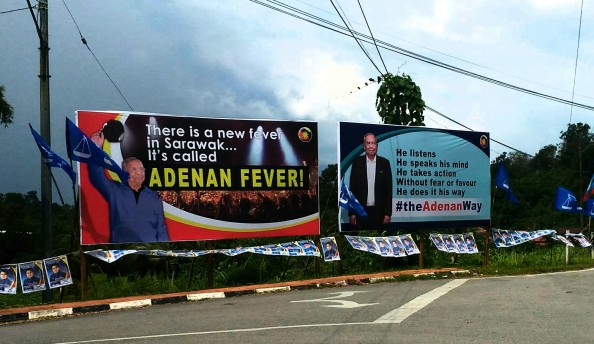
If you are in Sarawak right now during this period of campaigning for the *Sarawak Election, it would be quite obvious that the BN strategists have decided to ride on the Chief Minister Tan Sri Patinggi Adenan Satem’s brand name, the same way they rode on Prime Minister Datuk Seri Najib Razak’s during the 13th General Election.

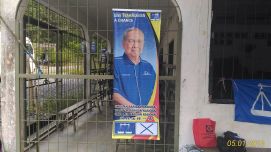
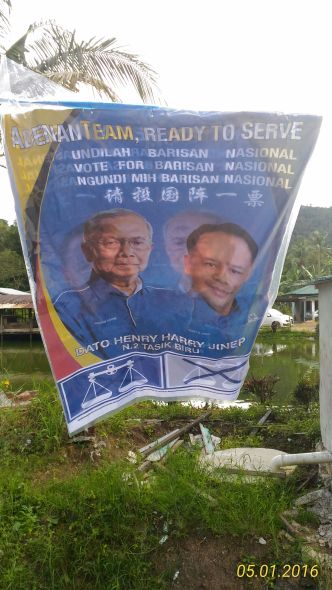
You would be forgiven if you thought that it was a US-style presidential election that is taking place. Everywhere you go you see huge billboards at every junctions declaring Adenan this, Adenan that. You have Team Adenan, The Adenan Way and even The Adenan Fever!
P_20160501_171147_p

The man has shrewdly moved away from the big black shadow of his predecessor, Taib Mahmud, who retired from office as one of the most reviled man in Malaysia for his excessive corruption. It is easy to love someone when he seems to act and talk different from someone as tainted as Taib Mahmud.

Adenan branded himself as a reformer, a Mr Clean, a straight-talker and a defender of Sarawakians. But is he? The way he is conducting himself during this election alone should be a warning to Sarawakians that he is not what he made himself out to be.

These are some of the reasons why all Sarawakians should be wary of the Adenan Fever.
  1. His arrogance showed when he usurp the Election Commission’s right to decide on polling day by announcing that it would be April 30th. In the end the EC set it as May 7th. He also boasted that he has successfully told the EC to create the Murum and Mulu seats for the Kenyah and Kelabit people. In his eagerness to show what a big man he is, he has no qualms in shaming the EC who is supposed* to be conduct the election and carry out the re-delineation exercise independently.
  2. He disregarded Section 67 of the Immigration Act that states clearly that the *Sarawak Authority cannot stop anyone from entering to engage in legitimate political activities. He banned scores of opposition politicians and activists from West Malaysia coming to help in the election. What is he afraid of if he is so popular? Or does he just want to show that he has the power and is not afraid to use? This is called abuse of power and in this case, he is breaking the law.
  3. He again disregarded the law by violating Section 10 of the Election Offences Act on bribery by using *Sarawak funds to make allocations to constituents during campaigning.   Hundreds of millions of Ringgit so far has been “allocated” to constituencies throughout Sarawak by both Federal and *Sarawak governments. There have been reported instances where such allocations are conditional that the Barisan Nasional’s candidate win in that constituency. Such blatant violation of the Election Offences Act goes on and Adenan is party to all these violations.
  4. He is not above using the race card to win votes when he urged the Bumiputras to unite so that they can win the 3 seats in Miri. He again played to the Bidayuh crowd at Serian when he lied that the Opposition was against them (Bidayuh) having more seats by opposing the re-delineation exercise. The Judicial Review taken by PKR’s YB See Chee How was against the Notice given by the EC to the affected voters, that it was insufficient, not against the seat increase, much less against the Bidayuh seats. So Adenan is not above blatantly lying and playing the race card. With such behaviours, UMNO doesn’t need to come in to Sarawak, PBB is doing a pretty good job of racial politics themselves.
  5. He does not separate big businesses from politics when he directly appoints tycoons as BN candidates. No prize for guessing what would be their priority when it comes to making money for themselves or serving the people. Cronyism is legitimized. Sarawak has suffered enough through decades of such partnerships between politicians and big business and it could ill afford another round of plunder and pillage by these people.
  6. His arrogance showed again when he had the audacity to ask fellow Chief Ministers, Azmin Ali and Lim Guan Eng to apply for permission to extend their stay beyond the 2nd and 5th of May that they were restricted to. Such blatant disrespect for their office is a sign that public institutions mean little to him. Did he really expect these men who represented Selangor and Penang to go crawling to him on all fours?
    P_20160501_165757_p
When you have lawmakers who are willing to break the law, then you have people who think they are above the law. To them the law is a big stick they use to keep the rest of us in line.
Adenan is no reformer. He is no Bernie Sanders, Jokowi or Aung Sang Suu Kyi. He was the Special Adviser to Taib Mahmud and part of of Taib’s inner circle for decades. How can he be a reformer overnight and a defender of Sarawakians when he is part of the same Barisan Nasional regime that has been and is still plundering the wealth of Sarawak?
Yes, as those big billboards in Sarawak declared, “There is a new fever in Sarawak and it’s called the Adenan Fever.” That should be a warning sign that the second poorest state in Malaysia is about to be duped (again) into giving this man a big mandate.

Remember that the real Team Adenan are people like Najib Razak and Taib Mahmud, whom he openly admits he is very close to and enjoys good working relationships with. Just like Najib was the poster boy of BN during the 13th General Election, Adenan may show his true colours soon after the election.

A fever is an indicator of a problem, a blood infection in the body and we should be very wary of the Adenan Fever, it may kill you!

Self-Governing Sarawak 1963


On 27 May 1961, Malayan Prime Minister Tunku Abdul Rahman Putra Al-Haj proposed a merger for closer political and economic co-operation between the Federation of Malaya, Singapore, Sarawak, North Borneo (as Sabah was known then) and Brunei.

      British Prime Minister Sir Harold Macmillan supported the idea and the first Malaysia Solidarity Consultative Committee (MSCC) meeting was held in Singapore two months later, followed by an eye-opening visit by leaders from Sarawak and Sabah to Malaya on 12 August 1962. In 1962, a five-man team of 2 Malayans and 3 British representatives headed by Lord Cameron Cobbold conducted a referendum amongst Sarawakians on the proposed Federation of Malaysia.
    The findings of the Cobbold Commission led to the Malaysia Agreement signed on 9 July 1963 by Malaya, Sabah, Sarawak and Singapore.   As spelt out in the 20-point requirements raised by Sabah and 18-point by Sarawak, the Agreement sought to protect the interest, rights and autonomy of the people of the two *states after the formation of Malaysia.
Sarawak Representatives at  Kuching Airport on 12 July 1963 after returning from London
where they signed the historic agreement to form Malaysia and end colonial rule.
Temenggong Jugah anak Barieng OBE, Datu Bandar Abang Mustapa CBE, Abang Haji Openg, Ling Beng Siew and P.E.H. Pike signed on behalf of Sarawak while Tunku Abdul Rahman Putra Al-Haj and Sir Harold Macmillan represented Malaya and Britain respectively.

      On 22 July 1963, the Governor of Sarawak, Sir Alexander Waddell, issued a proclamation to form the first Supreme Council with the appointment of Stephen Kalong Ningkan, the Chairman of Sarawak National Party (SNAP), as the first Chief Minister of Sarawak. The other members of the Supreme Council were Abdul Taib Mahmud, James Wong Kim Ming, Dunstan Endawie Anak Enchana, Awang Hipni Pengiran Anu and Teo Kui Seng. This marked the end of colonial rule and birth of Sarawak as a self-governing country.